 Solar PV & Energy
Solar O&M and Monitoring
Cleaning, inspection, thermal scans, string tests and performance tracking, for systems we installed and systems others installed.
What we usually find on site
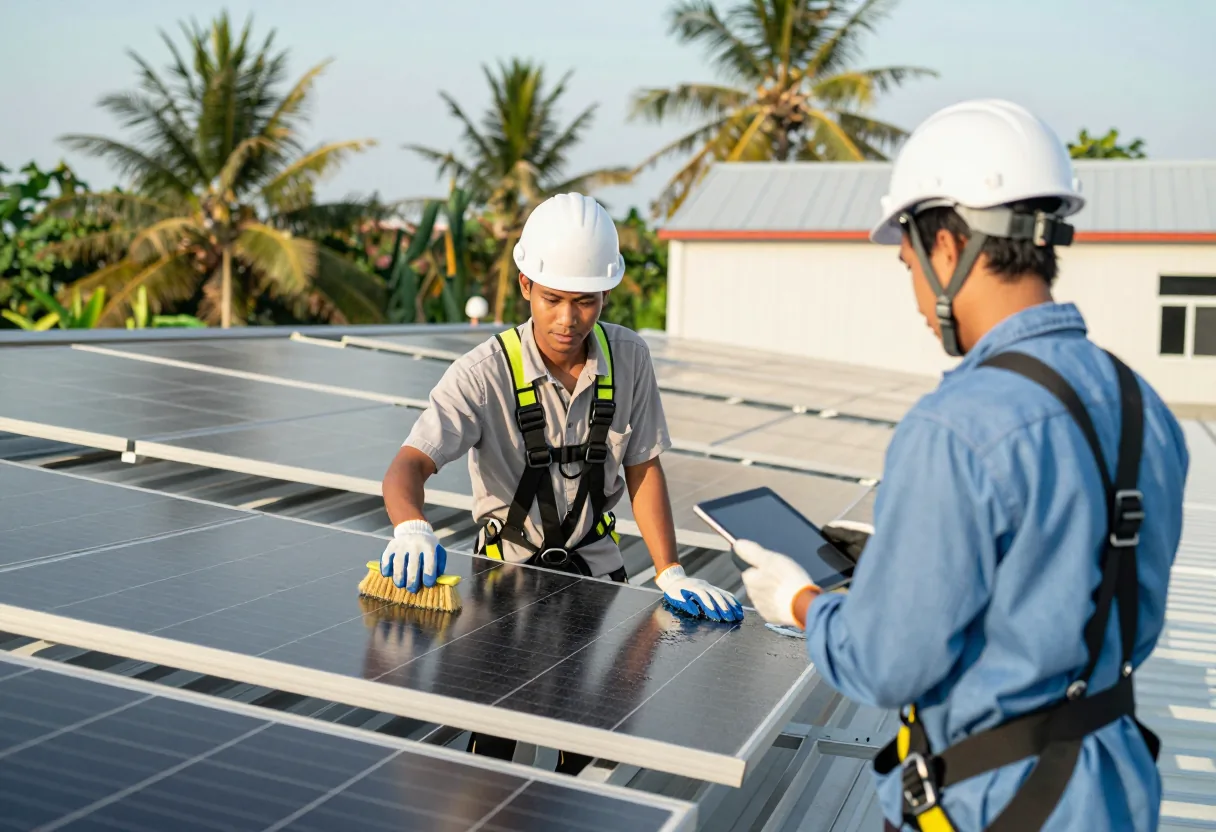
Many solar systems have nobody looking after them after handover. The monitoring login is lost, dust and bird droppings cover the panels, one string has been dead for months unnoticed, MC4 connectors have burned, and the tree next to the building has grown into the sun. Output falls a little at a time until the owner decides that is just how solar is.
O&M is more than washing panels
Cleaning matters, but the biggest losses usually cannot be seen by eye: a dead string, a hot connector, a failed bypass diode in a junction box, insulation resistance that drops after the rainy season, or a wrong inverter setting. We check with instruments, not just by looking at the status light.
What a routine visit covers
| Task | Tool | Looking for |
|---|---|---|
| Visual inspection | Camera, checklist | Broken panels, cracked glass, rusting frames, sagging cables, rodent damage |
| Thermal scan | Thermal camera in strong sun | Hot spots, cracked cells, failed diodes, hot connectors and breakers |
| String tests | Multimeter, clamp meter, I-V tracer when needed | Dead strings or strings below their neighbours |
| Insulation resistance | Insulation tester | Wet cables or connectors before the inverter trips |
| Inverter | App and alarm log | Fans, dust, firmware, grid and zero-export settings |
| Boards and earthing | Torque wrench, earth tester | Loose terminals, spent SPDs, broken earth conductors |
Tracked with numbers
We compare each month's specific yield (kWh per kWp) with the same month last year and with the design estimate, and compare strings on the same inverter against each other. A string that consistently lags its neighbours is a reason to go and look. Your report says what we found, what we fixed and what is still open, with photos.
Systems installed by others
We take on systems installed by other companies, including ones whose original installer no longer answers. The first visit is a full health check: we redraw the single-line diagram if there is none, recover access to the monitoring app and list the problems in order of risk. If the inverter itself is the problem, see inverter repair.
Send us the inverter brand, system size and a screenshot of the monitoring app on WhatsApp. We will tell you what the data already shows before we book a site visit.
What it does
Panel cleaning done right
Clean water, soft brushes, early or late in the day. No pressure washers, no walking on panels.
Thermal imaging
Finds hot spots, failed diodes and hot connectors in strong sun with the system at full output.
Electrical testing
Voc, string current and insulation resistance, compared with handover values.
Remote monitoring
We watch alarms and production in the maker's app, with access you grant.
Reports with photos
After every visit: findings, fixes, measured values and open items.
Systems from any installer
First health check, redrawn diagrams and recovered app access.
Design and rollout
- 1
Collect system data: brands, models, panel and string counts, app access.
- 2
First health check: visual inspection, thermal scan, every string and insulation tested.
- 3
Fix safety risks first: burned connectors, earthing, SPDs.
- 4
Agree the plan: cleaning frequency, annual inspection and alerting.
- 5
Monthly tracking and reports, with site visits when the numbers drift.
Where it fits
- Factory rooftops whose output has dropped for no obvious reason.
- Systems whose original installer has closed or stopped answering.
- Hotels and offices that want someone else watching the alarms.
- Off-grid systems at schools and health posts needing regular battery checks and cleaning.
- Sites near dusty roads, crushing plants or mines where panels soil quickly.
Typical system sizes
Health Check
Fits: One-off check for any size, or before we take a system on
- Visual inspection and thermal scan
- Every string and insulation resistance tested
- Report of issues ranked by risk
Routine Care
Fits: Homes, shops, offices and schools wanting year-round care
- Cleaning 2–4 times a year depending on the site
- Annual inspection with thermal scan
- Remote alarm watch with WhatsApp alerts
Commercial O&M
Fits: Factories and systems of several hundred kWp and above
- Monthly performance report
- Board inspection and torque checks
- Spare-parts plan and fault escalation procedure
Brands we supply & install





All brand names and trademarks belong to their respective owners. Mention does not imply official partnership unless explicitly stated. Products are sourced through legitimate distribution channels.
FAQ
Another company installed our system. Will you look after it?
Yes. We start with a full health check so we know the state of the system and anything unsafe, then propose a care plan.
Is our drop in output just panel degradation?
Usually not. Good panels lose only about 0.4–0.55% a year depending on type. If output falls faster, the usual causes are dust, new shading, a dead string, a failed connector, or an inverter that keeps tripping on high grid voltage.
How often should we do a thermal scan?
Once a year for commercial systems, and whenever a string underperforms. Scan in strong sun with the system at full output, or hot spots will not show clearly.
Can we clean the panels ourselves?
Yes, if the roof can be reached safely. Use clean water and a soft brush early or late when the panels are cool, no harsh detergents or pressure washers, and never walk or sit on panels: it causes cell cracks you cannot see.
Related guides
Solar O&M and Cleaning Checklist: Dust Season, Safe Cleaning and the Numbers to Watch
A cleaning schedule built around Lao seasons including the burning season, how to clean without damaging panels or people, monthly, quarterly and annual checklists…
Solar Inverter Fault Codes: What the Owner Can Check and What Needs a Technician
The fault families every inverter brand shares: low insulation resistance, ground fault, grid voltage or frequency out of range, overtemperature, reverse polarity, arc…
How to Choose a Solar Installer: The Buyer's Checklist
What should be in the quote and in the work itself: site survey, a bill of materials with brand and model, string design, commissioning tests, handover documents…
LiFePO4 Batteries for Solar: DoD, Cycles, BMS, Heat and Sizing
Why LiFePO4 has replaced most lead-acid in solar systems, how to read DoD, cycle ratings and warranties, what the BMS does, why heat matters in Laos, and how to size a…
Solar Inverter Types: String, Hybrid, Micro, C&I and Off-Grid Compared
How each inverter type works and where it fits, how to set the DC/AC ratio and match strings, and what to watch in the monitoring app so problems are caught early.
Roof Assessment Before Solar: Structure, Waterproofing, Wind, Shading and Orientation
The roof checklist we use on site for metal sheet, tile and concrete roofs: purlins and load, waterproofing, clamps and rails, wind, shading, tilt for Lao latitudes…
Related solutions
Solar PV & Energy
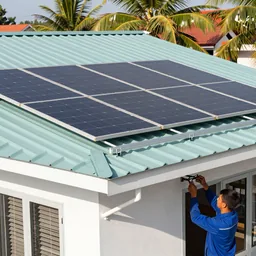 On-grid Rooftop SolarRooftop solar for homes, shops, offices and schools, sized to your daytime load, with a zero-export option.
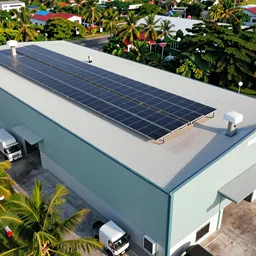 Commercial & Industrial SolarEngineered solar for factory roofs, carports and ground mounts, from a few hundred kWp up to megawatt scale.
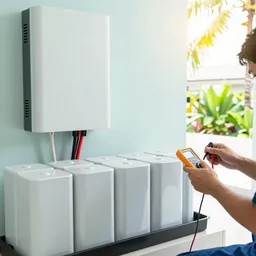 Hybrid Solar with Battery StorageHybrid inverter and LiFePO4 battery to keep power on through outages and evening brownouts, and to store daytime solar for the…
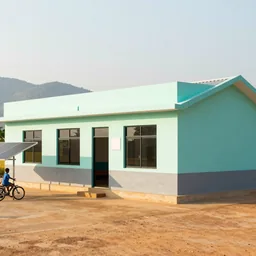 Off-grid Solar for Remote SitesStand-alone power for schools, health posts, farms, work camps and telecom sites with no grid or a weak one.
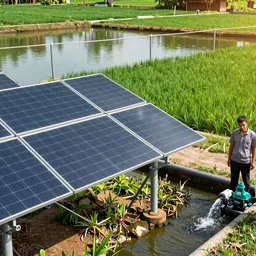 Solar Water PumpingPump from boreholes, streams or ponds with sunlight for orchards, rice fields, farms and village water supply, without fuel or a…
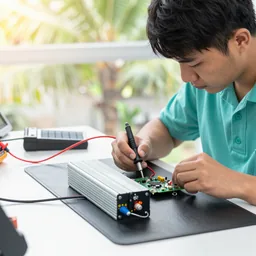 Solar Inverter & System RepairFault-code diagnosis, board-level repair where feasible, warranty claims with the maker, or replacement. Any system, whoever…
Send us a floor plan or a few photos of the site
We’ll come back with a few questions, then a first design. The first consultation is free, in Lao, Thai or English, on WhatsApp or our Facebook page.