On this page
- Panels last 25 years. The inverter is the part you will repair
- 1. String inverter (on-grid)
- 2. Hybrid inverter
- 3. Microinverters and optimizers
- 4. Commercial and industrial (C&I) inverters
- 5. Off-grid inverters (inverter-chargers)
- Setting the DC/AC ratio
- Monitoring: what to watch in the app
- Common mistakes when choosing an inverter
- Lao conditions
- How we can help
Panels last 25 years. The inverter is the part you will repair
Most of the solar repair calls we get are about inverters, not panels. An inverter holds capacitors, fans, relays and power semiconductors that work hard every day in the heat. Over the life of the panels, it is sensible to plan for at least one inverter repair or replacement. The inverter also decides what the system can do: whether it can provide backup, take a battery, limit export, and what data you will see. Choosing the right type matters more than choosing the brand.
1. String inverter (on-grid)
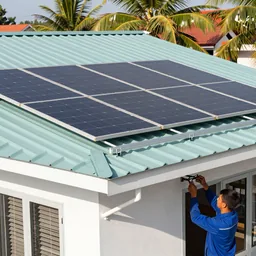
Panels are wired in series as strings, and several strings feed one inverter. Each MPPT tracks the maximum power point of the strings connected to it. This is the most common choice for on-grid systems on homes, shops, offices and schools.
- Single-phase: mostly 3–10 kW
- Three-phase: from about 5 kW upward, for buildings with a three-phase supply
- Specs to read: maximum DC voltage, MPPT voltage range, number of MPPTs and strings per MPPT, maximum current per MPPT, ingress rating (IP65 or better), and the temperature at which it starts to derate
A point that is often missed: newer panels carry higher currents. An older inverter with a low per-string current limit can cap what large panels deliver. If the roof faces more than one way (east and west, for example), put each orientation on its own MPPT.
2. Hybrid inverter
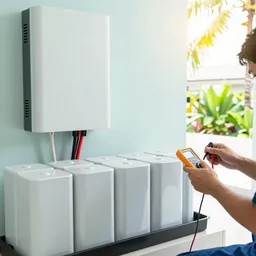
A hybrid works like a string inverter, plus it manages a battery and has a backup (EPS) output. Things to check:
- Battery voltage: low-voltage (48 V) battery models are common in homes and small offices. High-voltage battery models are usual on larger three-phase systems. The two are not interchangeable.
- Compatible battery list: the inverter must talk to the battery's BMS over CAN or RS485. If the battery is not on the maker's list, charging and protection may not work correctly.
- Backup power and transfer time: some models deliver full rated power on the backup output, others less. Transfer is typically around 10–20 ms or faster.
- Generator input: some models have a generator port and can start a generator, which is very useful in the provinces.
- PV oversizing: many models accept noticeably more panel capacity than their AC rating. Check the maximum PV input power and current on that model's datasheet.
3. Microinverters and optimizers
A microinverter mounts behind the panels, one unit per one, two or four panels, and sends AC down from the roof. An optimizer also sits at the panel but still sends DC to a string inverter. Both track the maximum power point of each panel individually.
They suit roofs with partial shade, roofs with several faces and angles, and buildings where you want low DC voltage on the roof or panel-level rapid shutdown. The trade-off: many electronic devices on a hot roof, and every failure means a trip up the roof. Check that the microinverter is rated for the power and current of current large-format panels.
4. Commercial and industrial (C&I) inverters
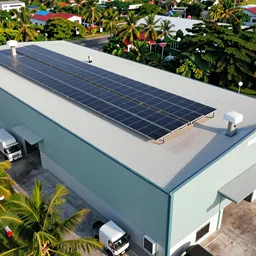
For factory roofs, warehouses and carports from a few hundred kWp to the MW range, the usual choice is several large three-phase string inverters. Central inverters are mostly used on very large ground-mounted plants. On rooftops we prefer several units: if one fails the rest keep running, and spares or replacements are easier to ship. A C&I system also needs a smart meter or power controller to manage zero-export or an export limit for the whole site, and careful design of lightning protection and earthing.
5. Off-grid inverters (inverter-chargers)
An off-grid inverter makes AC from the battery, and most include an MPPT charge controller and a generator charging input. What matters:
- Surge capacity: motors, pumps and fridge compressors draw two to three times their running current or more when they start. Low-frequency (transformer) models usually handle surges better.
- Idle consumption: on a small system, the inverter's own no-load draw can take more from the battery every night than people expect.
- Pure sine wave: essential for medical equipment, refrigeration and pumps.
Setting the DC/AC ratio
DC/AC ratio = panel kWp ÷ inverter kW. In the heat of Laos, panels almost never deliver their full nameplate kWp, so putting slightly more panel capacity on the inverter (about 1.1–1.3) keeps the inverter near full output for more hours. Go too high and at sunny noons the inverter throws the excess away (clipping). A little clipping is acceptable, as long as you stay within the maker's DC current and power limits.
| Type | Best for | Backup | Watch out for |
|---|---|---|---|
| String (on-grid) | Homes, offices, schools | No | Current per MPPT, heat |
| Hybrid | Sites with frequent outages | Yes | Battery compatibility, backup power |
| Micro / optimizer | Shaded or multi-face roofs | No (unless a battery system is added) | Electronics on a hot roof |
| C&I three-phase | Factories, warehouses, carports | No (mostly) | Export control, lightning protection |
| Off-grid | Sites with no grid | Main power source | Surge, idle consumption |
Monitoring: what to watch in the app
Almost every inverter now sends data to the cloud over WiFi, LAN or 4G. The app is not just for today's number:
- Compare yield with expectation: if sunny days keep producing less, suspect dust, new shade or a failed string.
- Compare string currents: strings with the same panels and orientation should carry similar current. A low one needs checking.
- Insulation resistance (Riso) alarms: these often appear after rain, when water gets into a cable or connector.
- Grid overvoltage trips: at the end of long rural lines, voltage can rise high enough for the inverter to trip at midday. That is a line problem, not a faulty inverter, but the voltage and AC cable size need checking.
In an organisation, put the inverter's dongle on a separate VLAN or guest network, away from the internal network, and change the default password. C&I systems should also allow local data access over Modbus, so you do not depend on the cloud alone.
Common mistakes when choosing an inverter
- Choosing on kW alone. Two 10 kW inverters can differ widely in MPPT count, current per string and backup power.
- Putting a single-phase inverter on a three-phase building without thinking. Solar then feeds only one phase while the load is spread across three, and the imbalance between phases can grow.
- Buying the hybrid first and looking for a battery later. Check the supported battery list first, or you may end up with a battery that cannot talk to the inverter.
- Mounting the inverter in a closed cabinet or under the roof. Trapped heat cuts output and wears out fans and capacitors early.
- Never switching on the monitoring after installation. On a system nobody watches, a dead string can go unnoticed for months.
Lao conditions
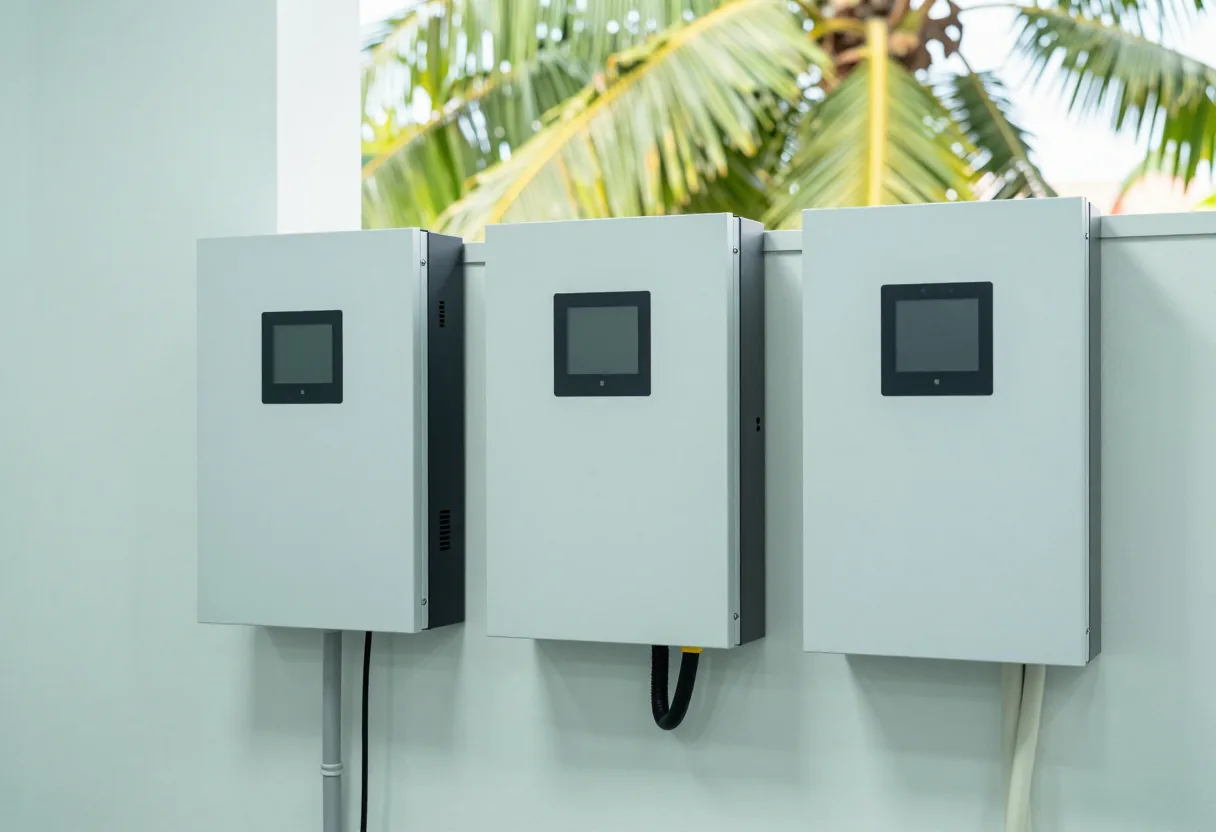
Mount inverters in the shade with good airflow. West-facing walls and closed storerooms make inverters derate and shorten their life. Fit SPDs on both DC and AC sides, because the rainy season brings a lot of lightning. Spares and replacements mostly come through Thailand, so choose brands with technicians and parts in the region, register the warranty correctly, and find out in advance how long a warranty return takes.
How we can help
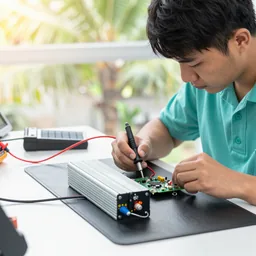
We design and install every type described here, and our team has installed more than 5 MW of solar PV in Thailand. We also repair inverters no matter who installed them: reading fault codes, diagnosing the cause, board-level repair where it is feasible, warranty claims with the maker, or replacement. If your inverter is showing a fault code, take a photo of the screen and the rating label and send it to us on WhatsApp. For a new system, see hybrid with battery and commercial and industrial systems, or read the sizing guide.
- #solar
- #inverter
- #hybrid-inverter
- #microinverter
- #dc-ac-ratio
- #monitoring