 Solar PV & Energy
Off-grid Solar for Remote Sites
Stand-alone power for schools, health posts, farms, work camps and telecom sites with no grid or a weak one.
What we usually find on site
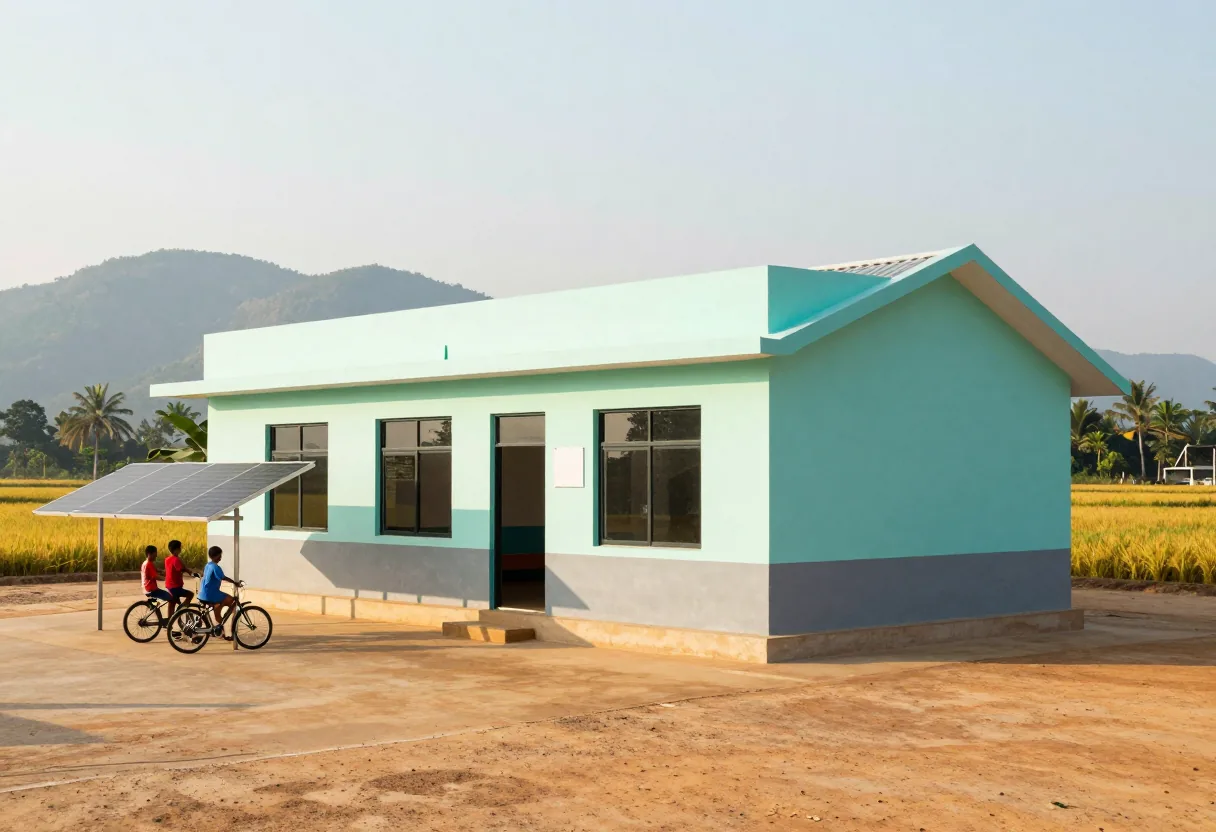
Many villages and work sites in the hills still have no power line, or a supply so weak that a fridge will not run. Generator fuel has to be hauled a long way, the sets are noisy and break down. Small do-it-yourself solar kits often work only in the dry season, and the battery dies within a year, because they were sized for sunny days rather than for the wettest month.
Designed for the darkest month
An off-grid system has no grid to fall back on. Every kWh you use must come from the panels and the battery. So we design for the month with the least sun in the rainy season, not the yearly average (about 4.5–5.5 kWh/m²/day), and give the battery days of autonomy for runs of overcast days.
Worked example: a provincial primary school
| Equipment | Use | Energy/day |
|---|---|---|
| 10 LED lights × 10 W | 6 hours | 0.6 kWh |
| 5 computers/laptops × 60 W | 6 hours | 1.8 kWh |
| 6 fans × 50 W | 6 hours | 1.8 kWh |
| Projector 250 W | 3 hours | 0.75 kWh |
| Total | about 5 kWh |
If the worst month gives about 3.5 peak sun hours and system losses are about 25%, the array needed is 5 ÷ (3.5 × 0.75) ≈ 1.9 kWp. We would fit about 2.4 kWp (four 600 W panels). Battery for two days of autonomy: 5 × 2 ÷ 0.9 ≈ 11 kWh of LiFePO4. This shows the method; every site needs its real load measured.
Cut the load before adding panels
Off-grid, every watt counts. Switching to LED lighting, inverter air conditioners or efficient fridges, and keeping electric cookers and kettles off the system, makes it much smaller. We will tell you plainly which appliances do not belong on it.
Built to survive a remote site
- An inverter-charger with a generator input for weeks when the rain does not stop
- Lightning protection and good earthing, since remote sites are often high and exposed
- Weatherproof, rodent- and insect-proof enclosures, and anti-theft bolts on the panels
- Remote monitoring over 4G where there is signal, so we see the battery before it runs flat
- Training for a local caretaker to clean panels and read the basic status lights
Tell us which province the site is in, how you get there and what will run on it. We will size the system and plan the transport.
What it does
Sized for the rainy season
Uses the sun of the weakest month, with days of autonomy in the battery.
Off-grid inverter-charger
Clean sine-wave output, built-in MPPT and a generator input.
LiFePO4 storage
Many times the cycle life of lead-acid, and no topping up with distilled water.
Lightning and earthing
SPDs on every port and a measured earth, critical on hilltop sites.
Remote monitoring
Battery state and alarms over 4G where coverage allows.
Local caretaker training
An illustrated Lao-language guide: cleaning, reading status lights, what not to plug in.
Design and rollout
- 1
List appliances and hours of use, then turn them into kWh per day.
- 2
Remove unnecessary loads and replace power-hungry appliances.
- 3
Size the array for the worst month, the battery for autonomy, and the inverter for peak load including motor start-up surges.
- 4
Pre-assemble and bench-test before shipping, and plan transport around the rainy season.
- 5
Install mounting, panels, equipment enclosure, earthing and lightning protection, then test every string.
- 6
Train the caretaker and switch on remote monitoring.
Where it fits
- Primary and secondary schools in remote districts: lights, fans and a computer room.
- Health posts: delivery-room lighting, vaccine fridges and phone charging.
- Mining and construction camps cutting generator run-hours.
- Farms and plantations far from the line: lighting, CCTV and electric fencing.
- Telecom repeaters and village Wi-Fi points.
Typical system sizes
Small Site
Fits: About 1–5 kWh/day: health posts, telecom points, remote homes
- 48 V inverter-charger with LiFePO4 battery
- Weatherproof, rodent-proof enclosure
- Lao-language caretaker guide
School & Farm
Fits: About 5–20 kWh/day: schools, farms, lodges
- Inverter sized for peak load, with generator input
- Two days of battery autonomy
- Remote monitoring where there is signal
Camp & Microgrid
Fits: Over 20 kWh/day, or several buildings sharing a generator
- Paralleled three-phase inverters
- Automatic generator start based on battery state
- O&M plan with on-site spares
Brands we supply & install








All brand names and trademarks belong to their respective owners. Mention does not imply official partnership unless explicitly stated. Products are sourced through legitimate distribution channels.
FAQ
Can an off-grid system run air conditioning?
Yes, but the system gets much bigger. A 12,000 BTU inverter air conditioner draws about 0.8–1.2 kW; eight hours is roughly 6–9 kWh a day, more than the whole school in our example. We usually advise running it only in the middle of sunny days.
Do we still need a generator?
For critical sites such as health posts and work camps, we recommend one. Designing to get through every rainy week with no generator means far more panels and battery than is sensible. A small generator that runs a few times a year is the more reasonable answer.
Who fixes it if it breaks somewhere remote?
Remote monitoring lets us see the problem and guide the caretaker over WhatsApp first; many issues are settings or dirty panels. If a visit is needed, we schedule it and bring the parts the diagnosis points to.
Related guides
On-Grid, Hybrid or Off-Grid Solar: Which System Fits Your Site?
How the three solar system types behave when the grid fails, what each needs on site, and how to choose for an office, factory, school or remote camp in Laos.
Solar System Sizing: From Your kWh Bill to kWp, Battery and Inverter
How to size panels, batteries and inverters from a monthly electricity bill and daytime load, with three worked examples: an on-grid office, a hybrid home and an…
LiFePO4 Batteries for Solar: DoD, Cycles, BMS, Heat and Sizing
Why LiFePO4 has replaced most lead-acid in solar systems, how to read DoD, cycle ratings and warranties, what the BMS does, why heat matters in Laos, and how to size a…
Solar for Schools and Public Buildings: Design, Safety and Upkeep
Schools and offices use power in daylight, which is when solar produces. How to size from the load, choose zero-export on-grid, hybrid or off-grid for remote schools…
Solar Inverter Types: String, Hybrid, Micro, C&I and Off-Grid Compared
How each inverter type works and where it fits, how to set the DC/AC ratio and match strings, and what to watch in the monitoring app so problems are caught early.
Related solutions
Solar PV & Energy
 On-grid Rooftop SolarRooftop solar for homes, shops, offices and schools, sized to your daytime load, with a zero-export option.
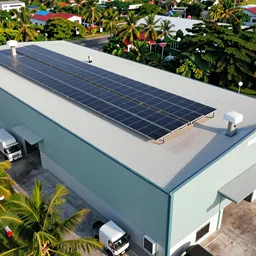 Commercial & Industrial SolarEngineered solar for factory roofs, carports and ground mounts, from a few hundred kWp up to megawatt scale.
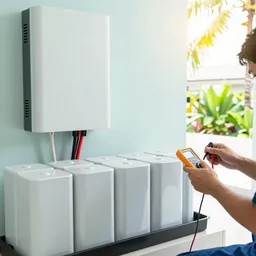 Hybrid Solar with Battery StorageHybrid inverter and LiFePO4 battery to keep power on through outages and evening brownouts, and to store daytime solar for the…
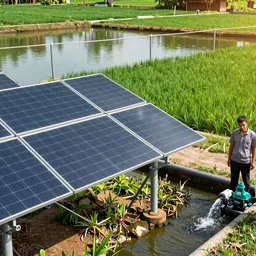 Solar Water PumpingPump from boreholes, streams or ponds with sunlight for orchards, rice fields, farms and village water supply, without fuel or a…
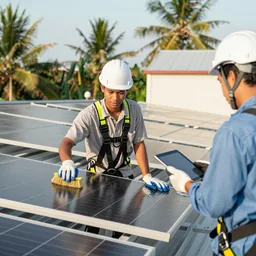 Solar O&M and MonitoringCleaning, inspection, thermal scans, string tests and performance tracking, for systems we installed and systems others installed.
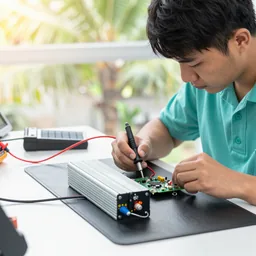 Solar Inverter & System RepairFault-code diagnosis, board-level repair where feasible, warranty claims with the maker, or replacement. Any system, whoever…
Send us a floor plan or a few photos of the site
We’ll come back with a few questions, then a first design. The first consultation is free, in Lao, Thai or English, on WhatsApp or our Facebook page.