 Solar PV & Energy
Solar Water Pumping
Pump from boreholes, streams or ponds with sunlight for orchards, rice fields, farms and village water supply, without fuel or a power line.
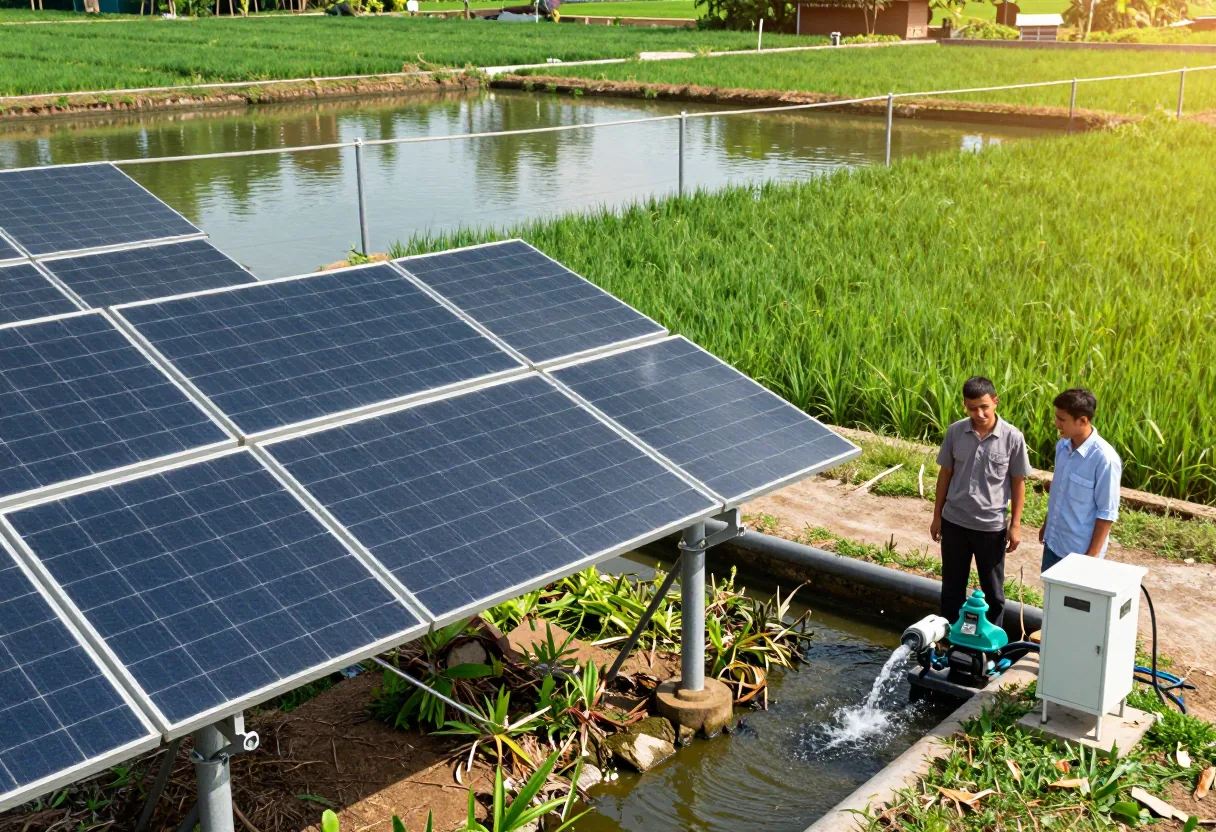
What we usually find on site
Many orchards and farms are far from the power line and rely on diesel pumps that someone has to start and refuel every day. Some buy a ready-made solar pump kit, then find it does not deliver enough water because nobody calculated the well depth and tank height, or the pump burns out because there was no dry-run protection.
Store water, not electricity
Most solar pumping systems have no battery. The pump runs while the sun shines and lifts water into a raised tank or pond, which then feeds by gravity whenever you need it. A tank costs far less than a battery and lasts much longer. And the dry season, when you need the most water, is also when the sun is strongest.
Two main types
| Type | Suits | Notes |
|---|---|---|
| DC pump (brushless) | Drinking water, small orchards, livestock, about 0.3–2 kW | High efficiency, runs from the panels through its controller |
| AC pump + solar pump inverter | Rice fields, large orchards, village water supply, several kW | Standard AC pumps (or your existing pump) with an MPPT drive |
A solar pump inverter is a VFD with built-in MPPT. It varies motor speed with the sunlight: slow in the morning, full speed at noon. The VFD's soft start avoids the inrush current of a direct-on-line start. Many models accept both DC from the panels and AC from the grid or a generator, so if you have a supply you can keep pumping on overcast days.
Sized from water and height, not horsepower
The two numbers that matter are water needed per day (m³) and total head: the water level in the well while pumping, plus tank height, plus pipe friction. For example, 30 m³/day at 40 m head needs about 3.3 kWh of hydraulic energy. Pump and motor together are roughly 45–55% efficient, so you need about 6–7 kWh of electricity a day and roughly 2–2.5 kWp of panels. We then choose a pump whose pump curve passes through that duty point, and arrange strings so the DC voltage sits in the drive's MPPT range.
Protecting the pump
- Dry-run protection: the drive watches motor current, or a level sensor sits in the well
- Float switch in the tank: the pump stops when it is full
- Surge and lightning protection on the DC side and the motor cable
- Correctly sized drop cable, because long runs lose a lot of voltage
Tell us how deep the well is, how many m³ per hour it yields, how high the tank sits and how many m³ a day you need. We will pick the pump and the array.
What it does
Solar pump inverter (VFD + MPPT)
Varies pump speed with the sun and soft-starts the motor; works with many existing AC pumps.
AC/DC dual input
Pumps on solar by day and switches to grid or generator when needed.
Dry-run protection
The pump stops when the well draws down and restarts after it recovers.
Pump chosen from its curve
Total head and flow calculated; not picked by horsepower.
Tank and float control
Water storage instead of batteries; the pump stops when the tank is full.
Secure array mounting
Galvanised steel frames, anti-theft bolts and fencing against cattle.
Design and rollout
- 1
Survey the source: depth, water level, yield in m³ per hour and water quality.
- 2
Set daily water demand and calculate total head (lift plus pipe losses).
- 3
Select pump and drive, then design strings to match the MPPT window.
- 4
Install the array frame, weatherproof drive enclosure, drop cable, sensors and earthing.
- 5
Test actual flow and the dry-run cut-out, then train the owner.
Where it fits
- Coffee and fruit plantations on the Bolaven Plateau that irrigate through the dry season.
- Dry-season rice and vegetable plots near rivers or ponds.
- Cattle, pig and poultry farms that need water every day.
- Village water supply: borehole to an elevated tank, then distribution.
- Schools and health posts needing clean water and water for toilets.
Typical system sizes
Drinking Water & Small Farm
Fits: About 2–15 m³/day, DC pump about 0.3–2 kW
- Brushless DC pump with controller
- Tank float switch and dry-run protection
- Galvanised array frame
Orchard & Field
Fits: About 15–100 m³/day, AC pump about 2–11 kW
- Solar pump inverter with MPPT
- Head calculation and pump selection from its curve
- AC input for generator or grid
Village Supply
Fits: Over 100 m³/day, or several pumps
- Three-phase drives and water-level sensors
- Remote monitoring where there is signal
- Training for the village committee on care and cleaning
Brands we supply & install





All brand names and trademarks belong to their respective owners. Mention does not imply official partnership unless explicitly stated. Products are sourced through legitimate distribution channels.
FAQ
Can we use our existing pump with solar?
Most AC pumps can, with a solar pump inverter matched to the motor's voltage and power. We check the motor nameplate, the pump's condition and the head first. A well-worn pump may be so inefficient that it needs too many panels, and sometimes a new pump is the better choice.
Does the pump run on cloudy days?
Yes, but slower and with less water. For drinking water or livestock we size the tank for 1–3 days, or use a drive that can also take AC from a generator.
What maintenance does a solar pump need?
Clean the panels, especially in the field-burning season, check cables and connectors, clear the intake screen and compare flow with the figure at installation. A large drop usually means a worn pump or a falling water level in the well.
Related guides
Solar System Sizing: From Your kWh Bill to kWp, Battery and Inverter
How to size panels, batteries and inverters from a monthly electricity bill and daytime load, with three worked examples: an on-grid office, a hybrid home and an…
On-Grid, Hybrid or Off-Grid Solar: Which System Fits Your Site?
How the three solar system types behave when the grid fails, what each needs on site, and how to choose for an office, factory, school or remote camp in Laos.
Solar O&M and Cleaning Checklist: Dust Season, Safe Cleaning and the Numbers to Watch
A cleaning schedule built around Lao seasons including the burning season, how to clean without damaging panels or people, monthly, quarterly and annual checklists…
Solar for Schools and Public Buildings: Design, Safety and Upkeep
Schools and offices use power in daylight, which is when solar produces. How to size from the load, choose zero-export on-grid, hybrid or off-grid for remote schools…
Related solutions
Solar PV & Energy
 On-grid Rooftop SolarRooftop solar for homes, shops, offices and schools, sized to your daytime load, with a zero-export option.
 Commercial & Industrial SolarEngineered solar for factory roofs, carports and ground mounts, from a few hundred kWp up to megawatt scale.
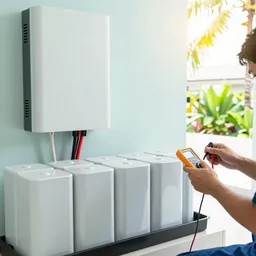 Hybrid Solar with Battery StorageHybrid inverter and LiFePO4 battery to keep power on through outages and evening brownouts, and to store daytime solar for the…
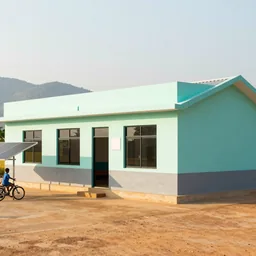 Off-grid Solar for Remote SitesStand-alone power for schools, health posts, farms, work camps and telecom sites with no grid or a weak one.
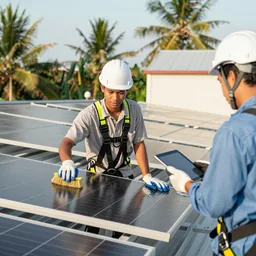 Solar O&M and MonitoringCleaning, inspection, thermal scans, string tests and performance tracking, for systems we installed and systems others installed.
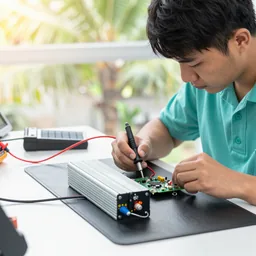 Solar Inverter & System RepairFault-code diagnosis, board-level repair where feasible, warranty claims with the maker, or replacement. Any system, whoever…
Send us a floor plan or a few photos of the site
We’ll come back with a few questions, then a first design. The first consultation is free, in Lao, Thai or English, on WhatsApp or our Facebook page.