JA Solar
JA Solar is headquartered in Beijing, China, and makes its own wafers, cells and modules. The current DeepBlue 5.0 generation uses N-type TOPCon cells (Bycium+ 5.0) and comes in bifacial glass-glass versions; DeepBlue 4.0 is still sold in many markets.
- Headquarters
- China
- Positioning
- Mid-marketEnterprise
- Official website
- www.jasolar.com

Who it suits
Mid-size rooftop and ground-mount projects that want TOPCon modules from a maker that controls most of its own supply chain.
Overview
Who JA Solar is
JA Solar is headquartered in Beijing, China. What sets it apart is that JA controls almost its whole production chain: wafers, cells and modules. In 2025 it was among the group of largest module shippers in the world, with sales offices on several continents.
The DeepBlue line
- DeepBlue 5.0: the current generation, launched in early 2025 with volume production from October 2025. It uses JA's own Bycium+ 5.0 N-type TOPCon cells. The large module reaches about 670 W and up to 24.8% efficiency. Bifacial glass-glass versions have about 85% (±5%) bifaciality and a Pmax temperature coefficient of −0.26%/°C. JA has extended the line into several sizes, including rooftop modules.
- DeepBlue 4.0 (including 4.0 Pro): the previous N-type generation, still sold in many markets. A quote for 4.0 is not wrong, but compare its numbers with 5.0.
What to check on the quote
Two warranties: the product warranty (covers a module that fails because of manufacturing) and the linear power warranty (sets the maximum output loss allowed each year). Both lengths vary by model and market, so read them in the warranty document for the exact model you buy.
Heat: at −0.26%/°C, with cells at 65°C (normal on a roof in April), output drops about 10% below nameplate. An older P-type PERC module at about −0.34%/°C would drop about 14%. That gap repeats on every sunny day.
Size and weight: 650–670 W modules are about 2.38 m long. For house roofs, ask for a smaller format.
Who it suits
JA suits factory roofs, ground mounts and mid-size systems that want TOPCon modules from a maker that has been on Tier 1 lists for many years and is available through many solar shops and distributors in Thailand.
Strengths
- In-house production from wafer to module means controlled material quality and a clear record of where the cells came from.
- DeepBlue 5.0 has a −0.26%/°C temperature coefficient and about 85% bifaciality, on par with today's top TOPCon modules.
- Many solar shops and distributors in Thailand carry JA modules, so finding replacements later is not hard.
Things to know before choosing
- During the changeover, Thai stock may hold both DeepBlue 4.0 and 5.0. Check that the model code on the quote matches the delivery note.
- As with every bifacial module, the rear-side gain on a low-mounted metal roof is small. Size the yield mainly from the front side, not from the brochure's best case.
- Large modules are heavy and long, so the roof structure and wind load need checking, especially on older buildings with light steelwork.
Using it in Laos
From sites in Laos:
- Long transport: modules heading to northern or southern provinces travel on rough roads. Ship whole pallets upright as the maker's manual says, and do an EL scan or a careful visual check before installing to catch cracked cells.
- April heat: this is when modules run hottest. Mounting with an air gap and a good temperature coefficient make a real difference.
- Rain and lightning: output drops in the rainy season and lightning is frequent. Fit SPDs on both the DC and AC side and bond every module frame to earth.
- Paperwork: keep serial numbers, flash-test sheets and handover measurements for claims through the Thai seller.
A fit for factories, warehouses, hotels and ground mounts. See commercial and industrial solar.
Compared with alternatives
JinkoSolar Tiger Neo 3.0 has nearly identical numbers (670 W, 24.8%, −0.26%/°C), so choose on stock, lead time and the warranty handling the Thai seller can actually deliver. Canadian Solar TOPBiHiKu is the option when you want a US-listed maker. LONGi fits better when the roof is small or partly shaded.
Product lines
- DeepBlue 5.0
- DeepBlue 4.0
Solutions that use this brand
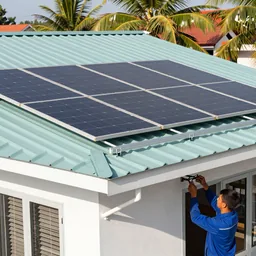 On-grid Rooftop SolarRooftop solar for homes, shops, offices and schools, sized to your daytime load, with a zero-export option.
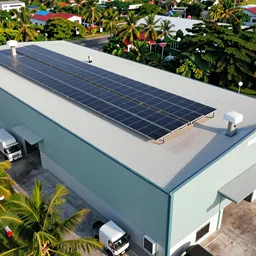 Commercial & Industrial SolarEngineered solar for factory roofs, carports and ground mounts, from a few hundred kWp up to megawatt scale.
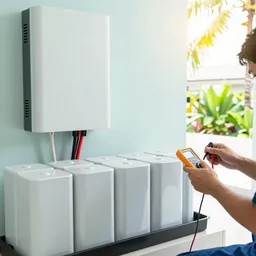 Hybrid Solar with Battery StorageHybrid inverter and LiFePO4 battery to keep power on through outages and evening brownouts, and to store daytime solar for the…
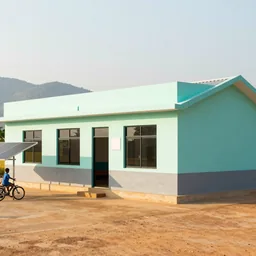 Off-grid Solar for Remote SitesStand-alone power for schools, health posts, farms, work camps and telecom sites with no grid or a weak one.
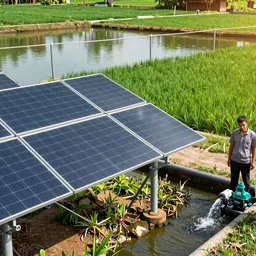 Solar Water PumpingPump from boreholes, streams or ponds with sunlight for orchards, rice fields, farms and village water supply, without fuel or a…
FAQ
Should we wait for DeepBlue 5.0 or buy the 4.0 in stock?
If 4.0 is ready and the project needs to start, buy it. There is a yield difference but it is modest. What matters more is that every module in a string is the same model and power class.
Does Tier 1 mean better quality?
Tier 1 is a list of makers whose modules banks will finance projects with; it is not a quality certificate for each module. It tells you the company is large and likely to be around to honour the warranty. Quality on site still depends on transport and installation. Read more in our Tier 1 panels guide.
Which inverter brands work with JA modules?
Modules are not tied to an inverter brand. What must match is cold-day string voltage, Isc per MPPT and the DC/AC ratio. We calculate this in every design, whether the inverter is Huawei, Sungrow or another brand.
All brand names and trademarks belong to their respective owners. Mention does not imply official partnership unless explicitly stated. Products are sourced through legitimate distribution channels.
Send us a floor plan or a few photos of the site
We’ll come back with a few questions, then a first design. The first consultation is free, in Lao, Thai or English, on WhatsApp or our Facebook page.