On this page
The question we actually get
"What should we buy for the power cuts: a generator, a big battery, or solar panels?" Shop and clinic owners ask us this almost weekly, usually after an evening when the freezer warmed up or the card reader died mid-sale. A generator runs as long as you can feed it fuel, which suits long outages. A battery bank with an inverter switches over in milliseconds and makes no noise, which suits short cuts and night-time loads. Hybrid solar trims the daytime bill and keeps the battery full, but it still needs backup thinking for the rainy season. This guide compares the three, shows the sizing maths, and ends with a checklist you can answer in ten minutes.
The three options in plain words
A standby generator is an engine that makes electricity from diesel or petrol. With an automatic transfer switch it starts 10 to 30 seconds after the grid fails and runs for hours or days while fuel lasts. For most sites under 50 people we would size the generator at roughly 1.5 times the essential load. Generators suit long outages, workshops with motors, and remote farms where fuel delivery is already routine.
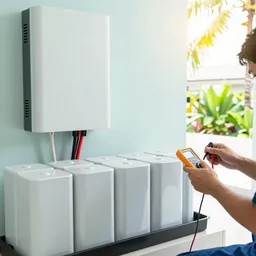
A battery backup system is an inverter plus a battery bank, usually lithium iron phosphate (LiFePO4). It carries selected circuits through a cut with a switch-over of a few milliseconds, so computers and point-of-sale terminals never notice. It is silent, needs no fuel run, and covers the evening brownouts between 17:00 and 19:00 well. Its limit is stored energy: once the kilowatt-hours are gone, the lights go out until the grid returns.
Hybrid solar is rooftop panels plus an inverter that blends solar, grid, and battery. On sunny days it powers the building and charges the battery, trimming the daytime bill; during a cut, the battery carries the essential loads. Think of it as a battery system with its own daytime fuel supply on the roof. Panels sized for March sunshine can fall well short in August cloud, which is why many sites keep a generator as the third leg.
Side-by-side comparison
| Generator + ATS | Battery + inverter | Hybrid solar + battery | |
|---|---|---|---|
| Switch-over time | 10 to 30 seconds | Effectively instant (a few ms) | Effectively instant (around 10 to 20 ms) |
| Noise | Loud engine, needs distance from rooms | Silent | Silent (inverter fan only) |
| Running cost drivers | Fuel use, oil and filter changes, engine hours | Battery cycle wear, small efficiency losses | Panel cleaning, inverter and battery wear |
| Maintenance | Oil, filters, test runs, fuel freshness | Mostly checks: terminals, firmware, ventilation | Panel cleaning, terminal checks, firmware, ventilation |
| Typical lifespan | Thousands of engine hours with service | LiFePO4 banks often quoted at 10 years or thousands of cycles at partial use | Panels 20+ years; inverter and battery replaced sooner |
| Fuel logistics | Storage, delivery, theft and spill risk at remote sites | None | None, but sun is the fuel and it varies |
| Best for | Long outages, motor loads, sites with fuel on hand | Short cuts, night silence, clinics and shops | Daytime savings plus backup where roof space exists |
Switch-over time decides whether your computers survive the cut: anything with a spinning engine needs an ATS pause, so PCs and network gear on a generator-only setup still want a small UPS in front of them. And battery lifespan depends on heat as much as cycles; a bank in a 40-degree tin shed ages faster than the datasheet promises, so shade and airflow are part of the purchase.
How to size a battery bank for backup hours
Battery maths is where most buying mistakes happen. Start from the load you must keep alive, in kilowatts, and the hours you must survive:
Battery energy (kWh) = load (kW) x hours / usable share
- A small shop keeping lights, fans, POS, and one freezer alive might draw about 2 kW. For 4 hours of backup at 80 percent usable depth: 2 x 4 / 0.8 = 10 kWh of LiFePO4.
- A clinic keeping vaccine fridge, lights, and router alive might draw about 0.5 kW. For 6 overnight hours: 0.5 x 6 / 0.8 = 3.75 kWh, so buy a nominal 4 kWh bank.
Why divide by 0.8? LiFePO4 tolerates deep discharge, but good designs keep about 80 percent usable to slow ageing. For most offices under 50 people we would add one spare hour on top, because loads always grow: one more freezer, one more camera recorder. Measure your real evening load with a clamp meter for a week. Nameplate ratings mislead; a tired "150 W" freezer can pull double that, and starting surge is what trips undersized inverters.
Size the inverter for the peak, not the average. Add up everything that can run at once, then add the largest motor's starting surge on top. If your essential load includes air conditioning, say so early: one 12,000 BTU unit adds roughly 1.2 kW running load plus a much larger starting kick, which often doubles the battery budget. Many shops sensibly leave air-con off the backup circuits.
Combining all three: solar plus battery plus generator
The strongest setup for unreliable grid is all three legs doing what each does best. Solar carries daytime loads and charges the battery. The battery covers short cuts and the evening peak silently. The generator rests until truly needed: long outages, or cloudy weeks when the battery never fills. It can also charge the battery directly through the hybrid inverter's generator input, which beats running it all evening at light load. One focused morning run of two to three hours can bank enough energy for the day's essential loads.
Wiring order matters. Put the generator behind an ATS or manual changeover, feed the hybrid inverter from that switched supply, and keep sensitive gear on the inverter output or a small UPS. If you want the full version of that chain, read UPS, generator and ATS for power cuts. If battery chemistry is new to you, our LiFePO4 battery guide explains usable capacity and care in more depth. Compare the three grid options in on-grid vs hybrid vs off-grid solar and try your numbers in the solar sizing calculator.
Size the generator for charging, not just for direct loads. A charger drawing 5 kW needs a generator comfortably above that once losses and other running loads are counted. Your installer should give you one line: generator kVA, charger kW, and expected fuel per charge run.
Rainy-season reality: solar yield drops
Anyone sizing solar from March sunshine will be disappointed in August. During weeks of heavy overcast, a rooftop array in Laos can produce roughly half its dry-season daily energy. That is normal, not a fault, and the design has to admit it. Three rules carry you through: size panels and battery for the worst month, not the best one; give the battery a second way to fill, by grid charging overnight or a generator charge run; and keep one discretionary load you can shed, like a water heater or decorative lighting, which can halve the backup load and double your hours.
Dust and heat take their own cut. Mine-area dust and dry-season haze coat panels fast, and a dirty array at 38 degrees ambient loses twice: less light in, and lower voltage from hot cells. Wash every few weeks in the dusty months with clean water and a soft brush in the cool morning. Lightning is the other rainy-season hazard: surge protection on DC and AC sides plus a real earth connection costs little next to one fried inverter.
What we usually see wrong
- Buying the battery for today's load with no spare hour. Within a year someone adds a freezer, and the 4-hour bank becomes a 2.5-hour bank.
- Backing up the whole building, air-con included, then discovering the battery price. Separate essential and non-essential circuits first.
- A generator with no test schedule. Engines that sit for six months often fail exactly when the storm arrives. Run it under load monthly and keep a fuel log.
- Panels with no cleaning plan. Output drifts down silently for months until the battery never fills.
- Guessing the load instead of measuring it. A week with a clamp meter is the cheapest part of the whole project and the most skipped.
Your decision checklist and the one next step
Answer these six questions and the right option usually picks itself. How long do your worst cuts last? Under an hour points to battery; whole evenings or days point to a generator or a three-leg system. What must stay on? List it in watts, measured, not guessed: freezers, vaccine fridges, POS, routers, and pumps usually make it; air-con usually does not. Can you live with 20 seconds of darkness? If servers or lab gear cannot blink, you need inverter or UPS output regardless of the generator. Where would a generator sit? Noise, exhaust, fuel storage, and neighbours decide this faster than any brochure. How much roof and sun do you have? Shade from a neighbour's upper floor or a mango tree can remove a third of an array's output. Who maintains it? Fuel logs, test runs, panel washing, and battery checks need a named person.
For shops and clinics with cuts under two hours, we would start with a measured load list and a battery sized for those hours plus one spare. For farms and remote offices with whole-day outages, we would plan the generator leg from day one. Either way, the next step is the same. Photograph your main breaker panel with the door open, note your three biggest loads in watts, and count how many hours your longest cut lasted last month. Send the photos, the watt list, and the hours to us on WhatsApp and tell us whether you prefer silent battery backup, a generator, or lower daytime bills, and we will sketch which leg to buy first.
- #backup-power
- #generator-vs-battery
- #hybrid-solar
- #battery-sizing
- #outage-planning