 Data Center & Servers
UPS & Power Protection
UPS, earthing and surge protection for servers, switches and CCTV. Built for outages, evening brownouts and rainy-season lightning.
What we usually find on site
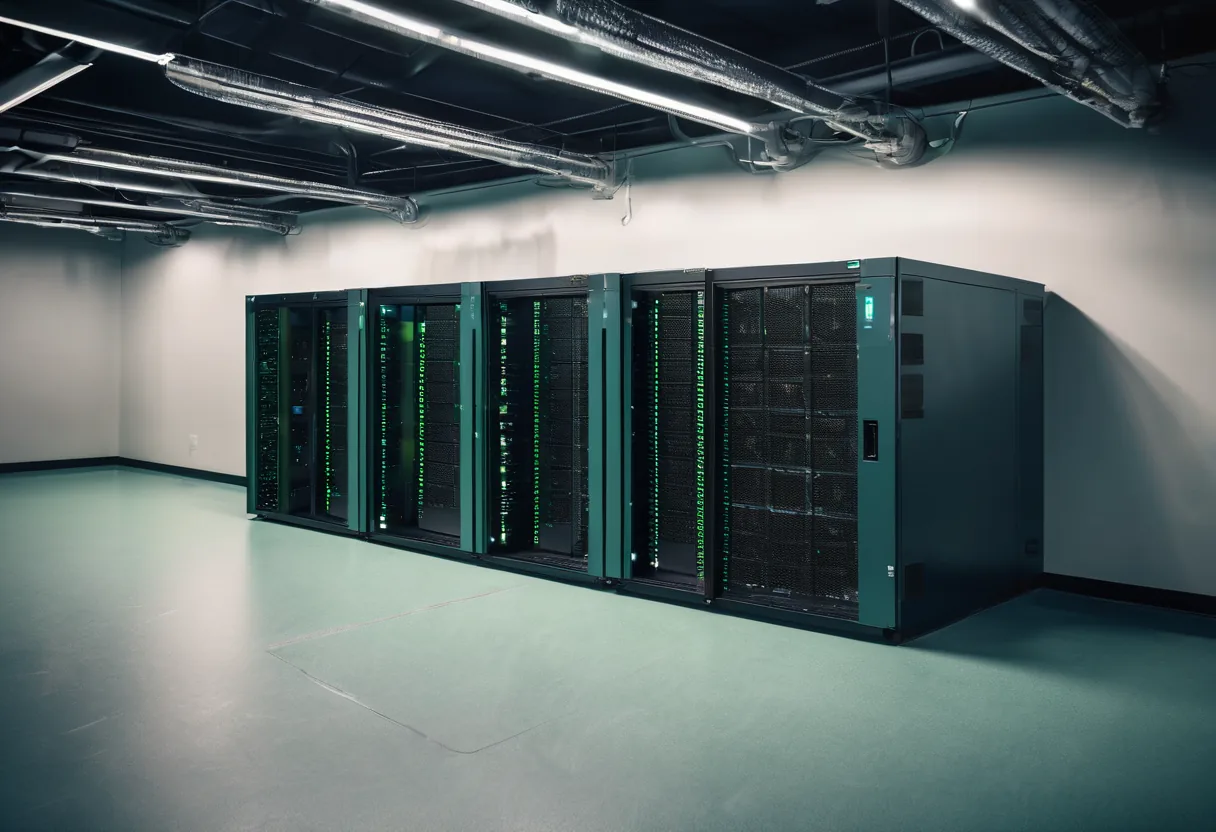
Power in many parts of Laos, especially in the provinces and at mine sites, brings outages, sags, surges and rainy-season lightning. Equipment without a UPS drops hard, databases get corrupted and power supplies die early. The other case we see a lot: there is a UPS, but its batteries wore out two years ago and nobody noticed, so in a real outage it lasts thirty seconds.
UPS types and when to use them
| Type | How it works | Best for |
|---|---|---|
| Offline / standby | Switches to battery on outage | PCs, small devices |
| Line-interactive | Built-in AVR regulates voltage; transfers to battery in a few ms | Switches, NVRs, small offices |
| Online double-conversion | Converts AC→DC→AC continuously; zero transfer time | Servers, server rooms, critical loads |
For servers and core switches we use online UPS almost every time. It rides through wide voltage swings without dropping to battery at every sag, so the batteries are not worn out by constant cycling.
Sized from real load
We measure actual load in watts rather than reading power-supply labels. We choose a UPS with about 20–30% headroom, then size batteries for the runtime you need. Ten to fifteen minutes is usually enough to shut servers down cleanly. If outages last hours, the answer is a generator with an ATS, not cabinets of extra batteries.
More than a UPS
- Earthing that has been measured. Without a proper earth, surge protectors cannot do their job
- SPDs at the main board and sub-boards
- Data-line lightning protection on LAN or PoE runs going outdoors to cameras or other buildings
- Network management cards that shut servers and NAS down in order
Tell us what equipment you have and how many minutes it must run, and we will size the UPS and batteries. Or try the UPS runtime calculator on this site first.
What it does
Online double-conversion UPS
Steady output with zero transfer time for servers and storage.
AVR & stabilizers
For network cabinets and NVRs: holds voltage through sags and swells.
Automated shutdown
Network cards shut down VMs, NAS and servers in sequence before the battery runs out.
Surge & lightning protection
SPDs on power and data lines, bonded to a proper earth.
Generator integration
UPS, ATS and generator for multi-hour outages, with the generator sized well above the UPS rating.
Battery lifecycle care
Yearly battery tests and replacement before failure. In a hot room, battery life roughly halves.
Design and rollout
- 1
Measure power quality and test the earth.
- 2
Total all loads and agree the required runtime.
- 3
Select UPS topology, capacity, batteries and maintenance bypass.
- 4
Install SPDs, earthing, UPS and PDUs.
- 5
Configure shutdown and alerts, then cut the mains for a live test.
Where it fits
- Mine and hydropower sites with an unstable grid and generators.
- Provincial bank branches keeping ATMs and core banking online.
- CCTV and switches that must keep recording through outages.
- Hospitals and labs with voltage-sensitive equipment.
Typical system sizes
Edge
Fits: Network cabinets and NVRs
- 1–3 kVA line-interactive or online UPS
- Runtime calculation including PoE load
- Surge protection for outdoor PoE runs
Server Room
Fits: 1–4 racks
- 6–20 kVA online UPS with external batteries
- Network card and automated shutdown
- Maintenance bypass and PDUs
Facility
Fits: Data center or critical building
- Modular or parallel N+1 UPS
- ATS and generator integration
- Maintenance and battery-testing contract
Brands we supply & install
All brand names and trademarks belong to their respective owners. Mention does not imply official partnership unless explicitly stated. Products are sourced through legitimate distribution channels.
FAQ
What is the difference between kVA and kW?
kW is real power; kVA is apparent power. Many modern UPSs have a 0.9–1.0 power factor, so a 10 kVA unit may deliver only 9 kW. Always size from the real kW load.
How long do UPS batteries last?
Typical VRLA batteries last about 3–5 years at 25°C. Every 10°C above that roughly halves their life, so a UPS in a 35°C room may need new batteries every two years. Lithium-ion lasts longer and tolerates heat better.
We have a generator. Do we still need a UPS?
Yes. A generator takes 10–30 seconds to start and pick up load, and its output often wanders. The UPS bridges that gap and cleans up the power.
Related guides
Sizing a UPS Properly: VA, Watts, Power Factor and Real Battery Runtime
Why some 3 kVA UPS units only deliver 1,800 W, how to choose between offline, line-interactive and online, how to estimate runtime realistically, and how to pair a UPS…
Server Room Checklist for a Hot, Humid Climate: Power, Cooling, Security and Cabling
The checklist we actually use when building or fixing server rooms in Laos: brownouts, failed AC, flooding, dust, and the documentation nobody writes.
The 3-2-1 Backup Rule (and 3-2-1-1-0) in Practice
The backup rule used worldwide, why ransomware added the extra "1" and "0", how to set RPO and RTO, a worked restore-time example, and how to make it work with Lao power…
Designing an Office Network: What to Decide Before You Buy Anything
The order of decisions an engineer follows when designing LAN, Wi-Fi, firewall and power for a 20–300 person office in Laos, with a checklist and a phased budget.
Internet Redundancy with Dual ISPs: When the Fiber Gets Cut
Failover or load balancing, how to pick two providers that won't fail together, the equipment you need, and how to test failover so you know it really works.
IT Budget Planning for SMEs: Stop Buying When Things Break, Start Ranking by Risk
Asset inventory, replacement cycles, CapEx versus OpEx, exchange-rate risk and a sample 3-year plan for a 50-person company in Laos.
Related solutions
Data Center & Servers
 Server VirtualizationCollapse a room of ageing servers into one cluster on VMware, Proxmox, Nutanix or Hyper-V, so one dead host no longer stops the…
 Hyperconverged Infrastructure (HCI)Compute, storage and virtualization in the same nodes; add a node when you need more. Built for 1–3 person IT teams with no SAN…
 NAS & SAN StorageCentral storage: NAS for shared files, SAN for VMs and databases, with RAID, snapshots and per-department permissions.
 Backup & Disaster Recovery3-2-1 backups with an immutable copy ransomware cannot delete, and restores that are actually tested, not just green job reports.
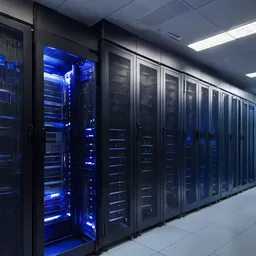 Server Room Build-outServer rooms built for the Lao climate: racks, N+1 cooling, online UPS, earthing, gas suppression, access control and alerting…
Send us a floor plan or a few photos of the site
We’ll come back with a few questions, then a first design. The first consultation is free, in Lao, Thai or English, on WhatsApp or our Facebook page.