On this page
- The server rooms we usually find
- 1. Location
- 2. Power
- 3. Cooling and humidity
- 4. Physical security
- 5. Fire protection
- 6. Cabling and documentation
- 7. Monitoring and maintenance
- Four things that take servers down
- Handover day: test it, don't just look at it
- What changes in Lao conditions
- The order we'd tackle it
The server rooms we usually find
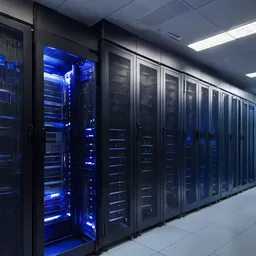
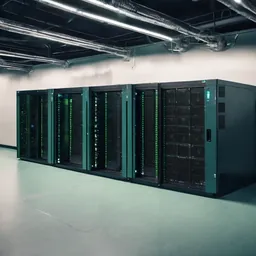
Servers, the NVR and switches sitting in a storeroom or under the stairs. One domestic AC unit that someone switches off in the evening to save power. Nobody knows the room temperature until the day a server shuts itself down. A good server room doesn't need to be big or expensive, but it does need to pass the list below.
1. Location
- Not on the ground floor if the area has ever flooded or pooled in the rainy season
- No water pipes or AC drain lines above the racks
- No windows catching direct afternoon sun
- Floor rated for the load (a full rack can weigh several hundred kilograms)
- At least 1 m clear in front of and behind the racks
2. Power
This is the section that matters most in Laos. Brownouts between 17:00 and 19:00 when the grid is at peak, and outages during storms, are normal.
- Dedicated circuit from the main distribution board
- Online double-conversion UPS for critical equipment
- Runtime long enough for a clean shutdown, or for the generator to start
- Generator with ATS if the business can't stop
- Rack PDUs; dual-PSU servers fed from two separate PDUs
- Measured earthing and surge protection at the distribution board
- UPS triggers automatic server shutdown on low battery (tested, not just installed)
Work out size and runtime with our UPS runtime calculator.
3. Cooling and humidity
ASHRAE's current thermal guidelines recommend server inlet air between 18 and 27°C. The upper moisture limit is a dew point of 15°C or 70% relative humidity, whichever is lower, but only where the air is clean. Where corrosive gases are present, which includes many mine sites, smelters and some factories, ASHRAE now advises keeping humidity below 50%. Outdoor humidity in the Lao rainy season is well above any of these figures, so the room needs to be sealed and the AC needs to pull moisture out. Damp air plus sulphur or chlorine in the air corrodes the copper on circuit boards.
- At least two AC units (N+1), alternating. With one unit, a failure can push a small room past 35°C within minutes
- Hot aisle / cold aisle layout: rack fronts face the cold air
- Blanking panels in empty U spaces
- Temperature and humidity sensors that alert to a phone
- Water-leak sensors under the AC units
Quick cooling estimate: nearly all the power IT equipment draws turns into heat. 1 kW ≈ 3,412 BTU/h. Equipment drawing 3 kW → about 10,236 BTU/h, plus heat from walls, people and lighting. In the Lao climate we add at least 30% → roughly 13,000–18,000 BTU/h per unit, two units in N+1.
Worked example: a two-rack room
| Load | Watts |
|---|---|
| 3 virtualization hosts × 400 W | 1,200 |
| Storage array | 350 |
| Core switches, firewalls, NVR | 450 |
| UPS losses (about 6% of load) | 120 |
| Lights, two people working inside | 300 |
| Total heat inside the room | 2,420 W |
2,420 W × 3.412 = about 8,260 BTU/h. Heat through a west-facing wall and roof on an April afternoon easily adds a few thousand more, so we would put in two 12,000 BTU/h units, each able to carry the room alone. If the plan is to add a third host next year, size for it now; replacing an AC costs more than buying the right one.
Office AC or precision AC?
A domestic split unit is built to make people comfortable for 8–10 hours a day. A large part of its capacity goes into removing moisture, and it is not designed to run around the clock. Precision (close-control) units spend almost all their capacity on cooling, hold humidity within a set band and are designed for 24/7 running. For one or two racks, two good inverter split units in N+1 are a reasonable compromise. Check one thing before you buy: the unit must restart by itself when power returns. Many home models stay off after a power cut until someone presses the remote, and that is how rooms overheat at 2 am.
What size of room do you actually need?
| Situation | What we would build |
|---|---|
| Up to one rack, under about 3 kW, in an office | Enclosed rack with built-in cooling (micro data center), or a small room with two split units |
| Two to six racks | Dedicated room, two or more AC units in N+1, hot/cold aisle, raised floor not required |
| Mine site, crusher, factory floor | Sealed room or container, positive pressure with filtered intake, humidity held under 50%, door airlock if dust is heavy |
4. Physical security
- Locked door with access control that logs entries
- CCTV covering the door and the rack aisle
- Lockable racks
- A visitor log for contractors and technicians
5. Fire protection
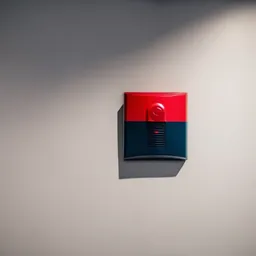
- Smoke detection linked to the fire alarm
- CO2 extinguisher by the door. Not dry powder, which gets into equipment and ruins it
- Larger or critical rooms: clean-agent gas suppression designed by a fire engineer
- No cardboard or combustible storage in the room
6. Cabling and documentation
- Power and data cables on separate paths
- Every cable labelled at both ends, every patch panel labelled
- Current rack elevations and network diagrams
- Asset list with serial numbers and warranty end dates
- Passwords in a password manager, not on paper taped to the rack
7. Monitoring and maintenance
- Monitoring that covers the UPS, temperature and server health
- Test the UPS and generator every quarter
- Clean AC filters monthly, more often on mine sites or near dusty roads
- Replace UPS batteries by age (typically 3–5 years, sooner in hot rooms). Order ahead: batteries imported from Thailand take time
Four things that take servers down
- A single domestic AC with an off-timer, or a person who switches it off.
- A UPS whose batteries died quietly and were never tested.
- The server room turning into a store for boxes and spare chairs.
- No temperature alerts. You find out when the servers go dark.
Handover day: test it, don't just look at it
A new or rebuilt room should go through these tests before anyone signs it off. Plan them outside working hours.
- Pull the input breaker to the UPS. Check that every rack stays up, the alert reaches a phone and, if there is a generator, that the ATS transfers and the UPS returns to mains.
- Let the battery run down to the shutdown threshold on a test VM or with the shutdown agent in test mode, and confirm hosts and storage shut down in the right order.
- Switch off one AC unit for 30 minutes and record the temperature. The second unit should hold the room inside 27°C on its own.
- Restore power after a cut and check that both AC units restart by themselves.
- Trigger the smoke detector test and confirm the fire panel and any gas system receive it.
- Wet the leak sensor and confirm the alert arrives.
Write the results down. Next year you run the same tests and compare.
What changes in Lao conditions
- Humidity in the rainy season. Keep the door shut and the room sealed; a room that is opened all day for storage never stays dry.
- Dust and smoke in the dry season. Burning season in the north and dusty access roads at sites clog AC filters and server fans quickly. Check filters every two weeks from February to April.
- Lightning. Long copper runs to outdoor cameras and other buildings bring surges back into the rack. Use fibre between buildings and surge protection on any copper that leaves the building.
- Spares. UPS batteries, AC parts and server power supplies usually come from Thailand. Keep spare fans, one spare power supply per server model and a set of patch cables on site.
- Landlord rules. In rented buildings, agree on AC outdoor-unit position, wall penetrations and dedicated circuits before the lease is signed, not after.
The order we'd tackle it
If budget is tight, fix power and cooling first. They're behind most of the failures we see. Small organisations may not need a room at all: an enclosed rack with built-in cooling (a micro data center) can sit in the office. Mine sites and factories need a sealed room with positive pressure and dust filters. Run this checklist again every year.
Take three or four photos of your server room, including the AC and the UPS, and send them to us. We'll tell you which items on this list to fix first.
- #server-room
- #datacenter
- #cooling
- #ups
- #checklist
- #fire-protection