 Physical Security
Perimeter Security
Watch kilometres of fence with thermal cameras, AI, fence sensors and lighting, for mines, plants and substations.
What we usually find on site
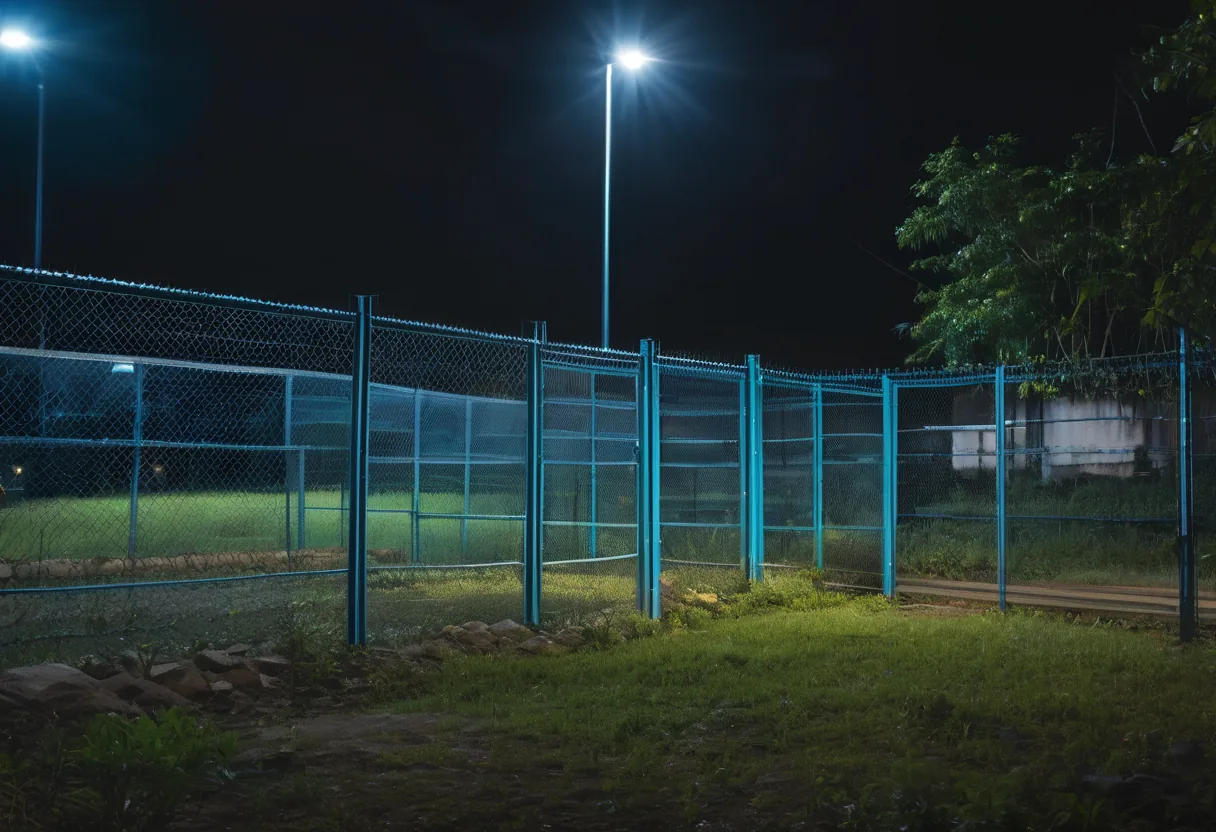
Mines, solar farms and substations have kilometres of fence that guards can't patrol fully. Copper cable, fuel and equipment theft tends to happen at night, at the point furthest from the guard house.
A secure perimeter is built in layers: deter → detect → verify → respond. Miss one and there's a gap.
Fast, accurate detection
- Thermal cameras see people and vehicles in darkness, fog and smoke at far longer range than visible cameras. They're for detection, not identifying who it is.
- AI analytics catch line crossing and zone entry and filter out animals and moving vegetation.
- Fence sensors (vibration or fiber-optic) know when someone climbs or cuts the fence and which zone it's in.
- Radar covers open ground with no fence.
Verify and respond
On an alarm, a PTZ camera swings to the spot on its own (slew-to-cue), floodlights come on and a speaker issues a warning. Most people leave when a voice announces "we can see you". At the same time, video goes to the control room and the guards' phones.
Infrastructure that survives the site
Poles far from grid power run on solar + battery and connect by PtMP radio or fiber. Batteries are sized for several overcast rainy-season days in a row, not one. Every pole is earthed with surge protection. And keep the fence line cut back: tall wet-season grass makes life much harder for AI and thermal cameras alike.
What it does
Thermal detection
People and vehicles in total darkness and fog.
AI false-alarm filtering
Separates people and vehicles from animals and trees.
Fence sensors
Detects climbing and cutting, by zone.
PTZ slew-to-cue
The PTZ swings to the event on its own.
Lights and talk-down
Sends intruders away before damage is done.
Solar and wireless poles
For spots with no power or cabling.
Design and rollout
- 1
Assess risk; walk the fence line, terrain and vegetation
- 2
Design detection layers: thermal, AI, fence sensors or radar
- 3
Plan poles, power (grid or solar) and network (fiber or radio)
- 4
Install with earthing and surge protection
- 5
Connect VMS, set slew-to-cue and write guard procedures
- 6
Run staged intrusion tests by day and by night
Where it fits
- Gold and copper mines: fences, fuel depots and explosives stores
- Substations and hydropower dams
- Solar farms exposed to copper cable theft
- Warehouses and dry ports near the border
Typical system sizes
Site
Fits: Up to about 1 km of fence
- AI line-crossing cameras with illuminators
- Talk-down speakers and phone alerts
- NVR with UPS
Industrial
Fits: 1–5 km
- Thermal cameras with PTZ slew-to-cue
- Zoned fence sensors
- Fiber or radio backhaul
Critical Infrastructure
Fits: 5+ km or critical sites
- Radar, thermal and fence sensors
- Control room with central VMS
- Solar poles and a maintenance agreement
Brands we supply & install
All brand names and trademarks belong to their respective owners. Mention does not imply official partnership unless explicitly stated. Products are sourced through legitimate distribution channels.
FAQ
Can thermal cameras identify faces?
No. Thermal is for long-range detection. To see who it is, you need a PTZ or visible camera with lighting working alongside.
Will animals and trees cause false alarms?
AI and on-site tuning cut them a lot. But what helps most is often just keeping grass and branches trimmed along the fence.
What about spots with no power?
Yes, with solar poles and batteries sized to the load and to several overcast days in a row in the rainy season. Tell us how long the fence is and where power is available, and we'll plan the poles.
Related guides
AI Video Analytics: What Actually Works for Mines, Factories and Shops in Laos
Intrusion detection, plate reading, PPE checks, people counting and natural-language search: what delivers, where the limits are, edge versus server, and how to run a…
Choosing CCTV Resolution and Lenses So You Actually See Faces: DORI and Pixel Density
An 8MP camera won't help if the lens is wrong. Pixels per metre, the IEC 62676-4 DORI levels, mounting height and angle, night images, and a worked warehouse design.
Sizing a UPS Properly: VA, Watts, Power Factor and Real Battery Runtime
Why some 3 kVA UPS units only deliver 1,800 W, how to choose between offline, line-interactive and online, how to estimate runtime realistically, and how to pair a UPS…
Related solutions
Physical Security
 IP CCTV SurveillanceH.265 IP cameras with NVR/VMS, designed around what each must see: faces, plates or overview. Built for dust, rain and power dips.
 AI Video AnalyticsCameras that tell people from leaves and dogs, alert on fence crossings, check PPE, count people and search footage in seconds.
 Access ControlOpen doors with a card, face, fingerprint or phone. Decide who goes through which door and when, and see every entry.
 Time AttendanceClock in by face, fingerprint or phone at every branch and site, with shift and overtime reports that go straight into payroll.
 Intrusion Alarm SystemsDoor, window and motion sensors with a siren and instant phone alerts, for offices, shops and warehouses.
 License Plate Recognition (LPR/ANPR)Cameras that read plates to open barriers, log every vehicle and tie trucks to weighbridge readings. Tested on real Lao plates…
Send us a floor plan or a few photos of the site
We’ll come back with a few questions, then a first design. The first consultation is free, in Lao, Thai or English, on WhatsApp or our Facebook page.