 Networking
Industrial Networking (OT)
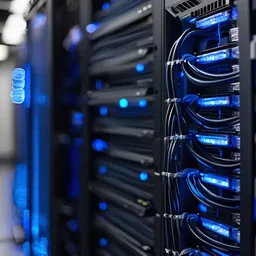
Hardened switches that survive dust, heat and vibration, with ring redundancy and IT/OT separation for plants and mines.
What we usually find on site
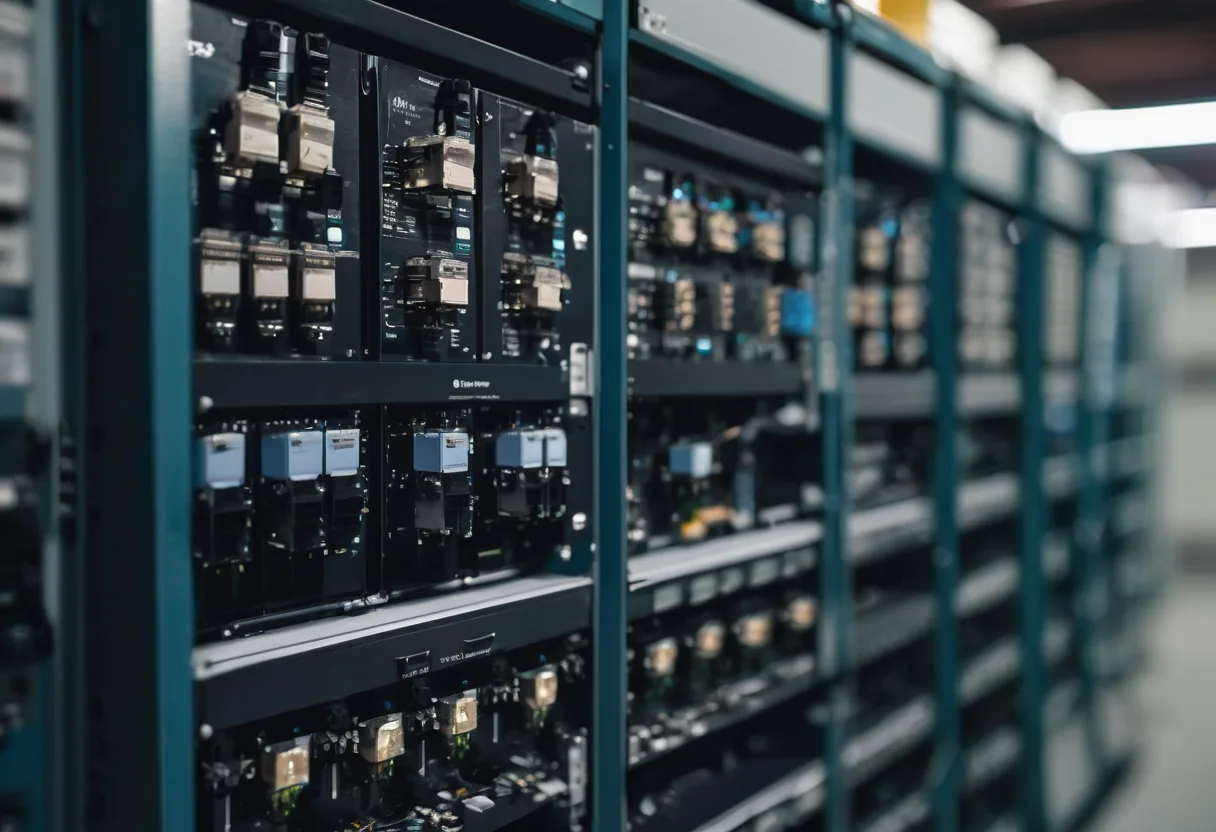
Office switches put into a plant or mine often don't last a year. The fan pulls in mineral dust, the cabinet runs above 50°C, and power dips every time a large motor starts. Worse, PLCs and SCADA often sit on the same network as office PCs, so one ransomware email can stop the line.
OT networks need different things from IT. They run 24/7, must recover fast from a cut cable and live in hostile conditions. We use fanless DIN-rail industrial switches with wide temperature ratings, dual DC power inputs and an IP rating matched to each location.
Ring redundancy and segmentation
ERPS (ITU-T G.8032) rings are designed to recover in around 50 ms, and several vendor ring protocols are in the same range. Plain RSTP is slower and not a good fit for real-time control.
We separate OT from IT using the IEC 62443 zones-and-conduits model, with an industrial firewall or DMZ in between. Production data the office needs can flow out through the DMZ without anyone getting a direct path to a PLC.
What we do differently on Lao sites
- IP54/IP65 enclosures with filtered fans or cabinet coolers. At dusty mines the filters need cleaning monthly, so it goes into the maintenance plan.
- UPS or battery-backed DC power, because site power dips constantly.
- Fiber between nodes, not copper, so lightning has nothing to follow.
- Spare switches kept on site. Ordering from Thailand and clearing the border can take weeks.
What it does
Hardened switches
Fanless, wide-temperature, DIN-rail.
Fast-recovery rings
ERPS or vendor rings. One cut cable doesn't stop the line.
IT/OT separation
Zones and conduits following IEC 62443.
Dual power
Two DC feeds with battery backup.
Industrial PoE
Feeds outdoor cameras and APs from the same cabinet.
IP65 enclosures and cooling
Keeps out mineral dust and rainy-season humidity.
Design and rollout
- 1
Survey production areas, PLC/SCADA assets and conditions
- 2
Define zones and conduits; design fiber rings
- 3
Install enclosures, switches and power
- 4
Put the firewall/DMZ between IT and OT
- 5
Test ring failover during a planned shutdown
Where it fits
- Gold and copper mines with dust, vibration and distance
- Hydropower plants and substations
- Cement, sugar and agro-processing plants
- Automated lines in special economic zones
Typical system sizes
Line
Fits: One line or 1–5 control panels
- Managed industrial switches
- Separate OT VLANs
- Redundant DC power
Plant
Fits: The whole plant
- Fiber ring and industrial core
- IT/OT firewall and DMZ
- IP65 enclosures with cooling
Mine / Utility
Fits: Sites spanning several km
- Multi-tier rings plus radio links
- OT monitoring and alerts
- Spares kit kept on site
Brands we supply & install
All brand names and trademarks belong to their respective owners. Mention does not imply official partnership unless explicitly stated. Products are sourced through legitimate distribution channels.
FAQ
Can I use office switches in a plant?
In a clean air-conditioned room, yes. On the plant floor the fan sucks in dust and it was never built for 50°C. We've seen them fail within months.
Why separate IT and OT?
Ransomware that arrives in a staff email can reach HMI PCs and PLCs if they share a network. Separate them and if the office is hit, the plant keeps running.
Do you support Modbus TCP or PROFINET?
The Ethernet network carries them. PROFINET has its own switch and timing requirements, so we work with your automation integrator to get VLANs and QoS right.
Related guides
VLAN Basics for Business: Keeping Guests, Cameras and Staff Apart
What a VLAN is, how 802.1Q tagging works, a sample VLAN/IP plan for a 100-person office, and how to migrate a live flat network without downtime.
Managed vs Unmanaged Switches: Why Boxes That Look Alike Aren't
How unmanaged, smart and fully managed switches differ, when unmanaged is still fine, Layer 2 versus Layer 3, and the eight settings every managed switch should have.
Cat6 vs Cat6A vs Fiber: Which Cable Goes Where
Cable in the walls outlives several generations of switches. Speed, distance and where to use Cat6, Cat6A and fiber, a worked quantity example, and how to accept a…
A Cyber Incident Response Plan That Works at 2 a.m.
A 5–10 page plan structure based on NIST SP 800-61, who does what, a playbook for a hijacked mailbox, and how to rehearse it in two hours.
Related solutions
Networking
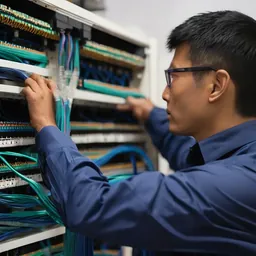 Structured CablingCat6/Cat6A and fiber, labeled at both ends, every link tested, drawings handed over. Cabling done right once lasts 15+ years.
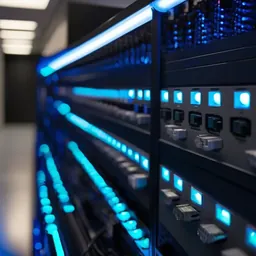 Enterprise LAN & SwitchingA core–access LAN with VLANs, redundant uplinks and enough PoE. One looped cable no longer takes down the whole building.
 Enterprise Wi-FiWi-Fi 6/6E/7 with APs placed from real measurements. Works in a full meeting room, holds calls while you walk, secured with WPA3.
 SD-WAN for BranchesProvincial branches run two internet links at once. If one fails, the other takes over within seconds, and everything is…
 Fiber Backbone & Campus LinksFiber between floors, buildings and sites at 10–100 Gbps. It doesn't conduct, so lightning can't ride it from one building to the…
 Point-to-Point Wireless LinksPtP/PtMP radio links over several kilometres for buildings and sites you can't cable, across roads and rivers.
Send us a floor plan or a few photos of the site
We’ll come back with a few questions, then a first design. The first consultation is free, in Lao, Thai or English, on WhatsApp or our Facebook page.