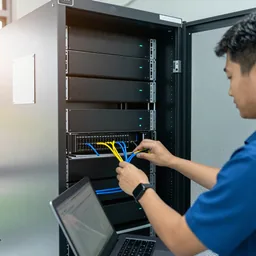
 企业 AI

现场常见问题
Many organisations are told AI can read anything and answer any question. Then they buy a server and find it struggles with their scanned Lao documents, handwritten forms or meeting recordings. The sensible order is the other way round: test on your own material first, then decide.
Why test before you buy
AI quality depends heavily on the task and the language. A system that writes good English summaries may read a scanned Lao invoice poorly. So we do not start with a server quote. We start with your material.
How the pilot runs
- You choose 20–50 real samples: documents, forms, recordings or questions your staff ask every week. Include the hard ones.
- We agree in writing what "good enough" means for each task, for example which fields must be read correctly and which a person will still check.
- We run the samples on a test setup and return the results side by side with the originals. Every mistake stays visible.
- We say plainly where it is weak: handwriting, mixed Lao–Thai–English text, poor scans, regional accents, noisy rooms.
What you get at the end
A short report: which tasks are worth doing now, which are not ready yet, what server size the useful tasks need, and how staff would check the output. If the answer is "not yet", that is a good answer, because you have spent nothing on hardware.
Your samples are handled under the same rules as a live system. We agree first where they are kept, they are never used to train a public AI model, and they are deleted or returned when the pilot ends. What usually comes next is a private document assistant or speech-to-text for meetings.
功能
Your own samples
20–50 real documents or recordings, hard ones included, not a tidy demo set.
Pass criteria agreed first
Written down before we start, so nobody argues about the result afterwards.
Side-by-side results
Every output sits next to its original. Mistakes are left in.
Lao measured, not assumed
The report shows, task by task, how Lao, Thai and English performed on your material.
An honest "not yet"
If a task is not ready, you hear it before you pay for any hardware.
Server sized from the results
The server is sized after the pilot, only for the tasks that passed.
设计与实施
- 1
A WhatsApp chat or call: which work takes up staff time and what languages the documents are in.
- 2
You choose 20–50 real samples per task and may blank out names or details you prefer not to share.
- 3
Pass criteria and sample-handling rules written down before anything runs.
- 4
Run the pilot and lay results beside the originals, marking errors and low-confidence spots.
- 5
Review the results with the staff who actually do the work, because they know which mistakes are acceptable.
- 6
Report: recommended tasks, tasks not ready yet, server size and how output will be checked.
适用场景
- For example, a procurement team that wants to know whether AI can really find clauses in old contracts.
- For example, an accounting team typing Lao and Thai invoices into Excel by hand every month.
- For example, a meeting secretary who wants to try transcribing Lao meetings.
- Offices with years of scanned files and no idea whether the scan quality is good enough.
- Managers who want real evidence before approving a hardware budget.
常见系统规模
Single task
适用于: One department, one kind of document or recording
- Pass criteria written down first
- Side-by-side results for every sample
- Short report with a recommendation
Several tasks
适用于: 2–3 tasks, such as document search and data entry, in several languages
- Lao, Thai and English results compared per task
- A review session with the staff who do the work
- Server sizing for the tasks that passed
Organisation-wide
适用于: Several departments or branches that want one plan
- Readiness check of documents, network and server room
- A priority order of which tasks to do first
- Installation and staff-training plan
常见问题
Do we have to buy a server before the pilot?
No. The point of the pilot is that you see results first and decide afterwards. Server size is set once we know which tasks passed.
What if the Lao results are poor?
We tell you plainly and explain why. Sometimes it can be fixed with cleaner scans, typed forms instead of handwriting, or by starting with the Thai and English parts. For some tasks the right answer is to wait.
Which samples should we choose?
Pick the everyday ones and the hardest ones: blurry scans, handwriting, mixed-language pages. If you only send clean samples the result looks better than reality, and the problems arrive after go-live.
Will the live system match the pilot?
The same sample set becomes the acceptance test. We run it again before go-live and after every update, so you see at once if results change.
相关指南
如何一步步开展 AI 试点
分步试点:选一项任务,收集 20–50 个真实样本,预先写好合格标准,与现有做法并行对比,和员工一起复盘错误,决定是否推进,最后才确定服务器配置。
AI 与老挝语:信任之前要测试什么
老挝语 AI 需测试:印刷与手写、扫描/拍照质量、老泰英混排、数字日期人名、声调符号及 ໜ ໝ ຳ、口音与噪音下的语音、翻译草稿,并教您建小型测试集人工打分。
私有 AI 与云端 AI:企业如何选择
自有服务器运行 AI 与使用公共云 AI 服务有何不同:数据敏感度、对网络的依赖、可控性与维护,附简单清单逐项任务决策。
把公司文档交给 AI 之前的数据隐私检查清单
员工把合同、发票或客户名单粘贴到 AI 之前,应逐项检查:文档分级、AI 在哪运行、谁有账号、提问是否被记录、是否被用于训练公共模型、数据保留多久。
如何诚实地在营销中使用 AI 生成的图片和视频
AI 图片和视频用得诚实就能助力营销:标注 AI 生成,不冒充真实产品、场所或效果;用真人面孔或声音作参考前先征得同意;核查素材版权,保留原图和提示词,发布前人工审核。
相关解决方案
企业 AI
 私有 AI 文档助手部署在您自有服务器上的私有助手,检索内部文档并用老挝语、泰语或英语作答,每个答案都标明出处文件和页码。
 AI 语音转写与会议纪要在自有服务器上将老挝语、泰语或英语的会议和录音转为文字,再起草纪要供秘书核对确认。
 AI 单据数据录入AI 读取表格、发票和证件类文档,录入电子表格或业务系统,并标出不确定字段供员工核对。
 AI 内容工作室AI 制作营销图片和短视频,每件作品都标注为 AI 生成,绝不冒充您的真实产品或场所。
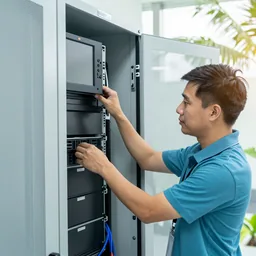 AI 服务器部署与维护我们在贵司内部安装 AI 服务器,配置用户账号、备份并做验收测试,之后持续维护,每月复测。
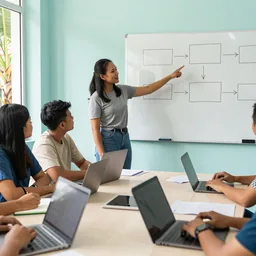 AI 员工培训老挝语、泰语或英语实操工作坊:日常安全使用 AI、编写提示词、核查输出以及数据使用规则。
发给我们建筑平面图或几张现场照片
我们会先询问一些细节,再给出初步设计方案。首次咨询免费,可用老挝语、泰语或英语,通过 WhatsApp 或 Facebook 主页联系。