 光伏与能源
现场常见问题
Most buildings use the most power during the day: air conditioning, fridges, computers and water pumps. An empty roof can produce that power on site. What we often find instead are systems oversized for the load, miswired strings, no surge protection or earthing, and roofs that leak after the first rainy season.
How an on-grid system works
Panels produce DC power, the on-grid inverter turns it into AC and feeds the building's switchboard. The building uses solar power first and draws the rest from the grid as usual. There is no battery, so when the grid goes down the inverter stops by itself (anti-islanding) to protect line workers who may be repairing the network. If you need power during outages, look at hybrid solar with battery.
Sized to your daytime load
We start from twelve months of electricity bills and, where possible, one to two weeks of measured load. What matters is the daytime base load (09:00–15:00), not the monthly total. A system larger than the daytime load overproduces, and with zero-export set, that surplus is simply curtailed.
An example: an office that steadily draws about 8 kW during the day suits a system of roughly 8–10 kWp. With about 4.5–5.5 kWh/m²/day of sun across Laos and Thailand, a 10 kWp system makes roughly 35–45 kWh on a good day and less in the rainy season. That is an estimate, not a guarantee.
Zero-export and export limiting
Many buildings do not want, or are not able, to push power back into the grid. We install a smart meter or CT on the incoming supply; the inverter reads it and throttles its own output so nothing flows out. We coordinate the grid connection with the local power utility for you.
What makes a system last 25 years
- Tier 1 panels and an inverter named by brand and model on the quote
- String sizing checked against Voc on the coldest morning and voltage on a 70°C roof
- DC isolators, SPDs on both DC and AC sides, and measured earthing
- MC4 connectors of the same make on both halves of every joint, never mixed brands
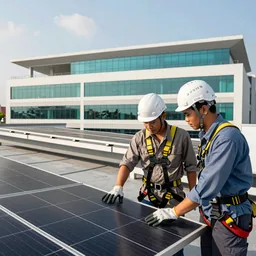
- A structural check of the roof and waterproofing at every penetration
Send us photos of your roof and your last three electricity bills on WhatsApp. We will tell you what system size makes sense and what we need to check on the site visit.
功能
Sized from real load
Based on daytime load and 12 months of bills, not on how much roof there is.
Zero-export with a smart meter
The inverter throttles back when building load drops, so no power flows out to the grid.
Tier 1 panels, checkable equipment
Every quote names the brand, model and datasheet of the panels and inverter.
DC-side safety
DC isolators, SPDs, string fuses where needed and DC cable run in UV-resistant conduit.
Monitoring app
Daily and per-string production on your phone. With your permission, we see the same alarms.
A roof that stays dry
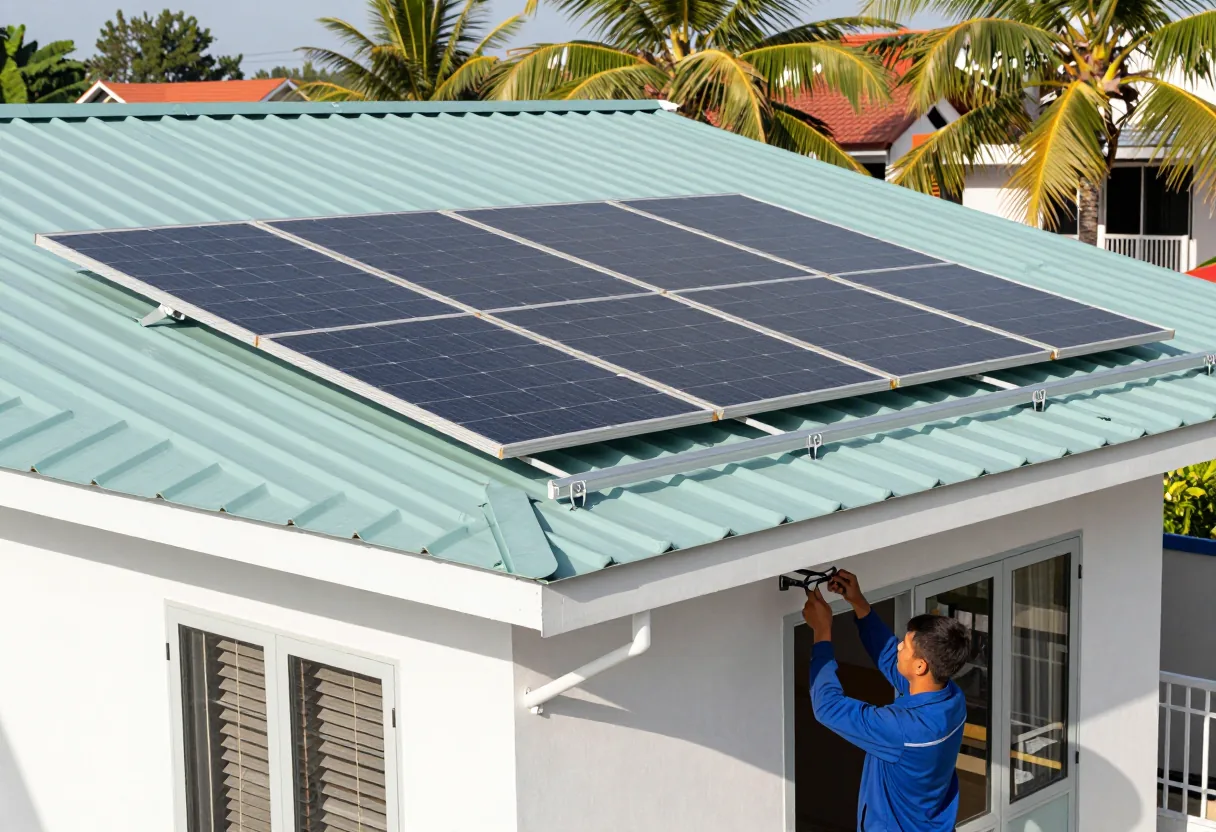
Mounting matched to the roof type (metal sheet, tile, concrete slab) and sealed at every fixing.
设计与实施
- 1
Roof survey: orientation, pitch, shading from trees and neighbouring buildings, condition of the roof structure.
- 2
Load and bill analysis, then choose kWp and inverter size.
- 3
String design, single-line diagram and yield estimate, with a bill of materials naming brand and model.
- 4
Install mounting, panels, inverter, DC/AC boxes, SPDs and earthing.
- 5
Commissioning: Voc and Isc on every string, insulation resistance, polarity, earth continuity, inverter and zero-export settings.
- 6
Handover documents, monitoring app set-up and a walk-through on how to shut the system down safely.
适用场景
- Offices in Vientiane running air conditioning all day.
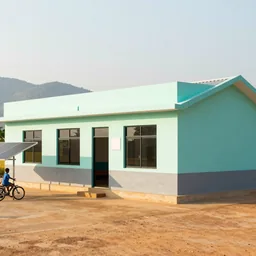
- Schools that use most of their power during class hours and have large roofs.
- Shops, minimarts and restaurants with chillers running all day.
- Homes occupied during the day with air conditioning or water pumps.
- Government offices and service buildings working 08:00–16:00.
常见系统规模
Home & Shop
适用于: Single- or three-phase supply, one roof, roughly 3–15 kWp
- One string inverter with monitoring app
- Zero-export with smart meter if required
- DC and AC surge protection, earthing
Office & School
适用于: Three-phase supply, 1–3 building roofs, roughly 15–100 kWp
- One or more three-phase inverters
- Load logging before design and a yield estimate
- Roof walkways for cleaning and inspection
Multi-building
适用于: Campuses or branch networks that want one view across sites
- Per-building design matched to each building's load
- One monitoring portal across all sites
- Yearly O&M and cleaning plan
我们供货并安装的品牌










所有品牌名称和商标归其各自所有者所有。除非另有明确说明,提及某品牌并不代表与其存在合作关系。产品均通过正规分销渠道采购。
常见问题
Does an on-grid system work during an outage?
No. An on-grid inverter must stop when the grid fails so it cannot energise lines that crews are repairing. For power during outages you need a hybrid system with a battery. Many systems can add a battery later if you choose a battery-ready inverter from the start.
How much roof does a 10 kWp system need?
Current panels are about 580–620 W each and about 2.6 m² in area. A 10 kWp system therefore needs around 17 panels, or roughly 50–60 m² including gaps and walkways. Roof area shaded between 09:00 and 15:00 should not be counted.
Do panels degrade fast in the Lao heat?
Current n-type panels degrade about 0.4% a year after the first year, and makers give a 25–30 year performance warranty. Heat does not speed up degradation much, but it lowers output on the day: a panel at 65°C produces roughly 10–14% less than its label, depending on panel type. Leaving an air gap under the panels helps.
How often should panels be cleaned?
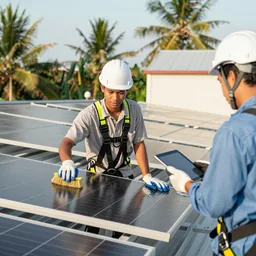
In town usually 2–4 times a year, especially at the end of the dry season when dust and smoke from field burning are heavy. Near dusty roads or factories it may need to be more often. Use clean water and a soft brush, never a pressure washer.
相关指南
并网、混合还是离网光伏:哪种适合您的站点?
三种光伏系统在电网停电时的表现、各自的现场条件要求,以及老挝的办公室、工厂、学校或偏远营地如何选择。
光伏系统选型:从电费单 kWh 到 kWp、电池和逆变器
如何根据月度电费和白天负荷确定组件、电池和逆变器容量,附三个示例:并网办公室、混合住宅和离网卫生站。
光伏安装前的屋顶评估:结构、防水、抗风、遮挡与朝向
我们在现场评估彩钢瓦、瓦片和混凝土屋顶的清单:檩条与荷载、防水、夹具与导轨、风荷载、遮挡、适合老挝纬度的倾角、走线路径和清洗通道。
Tier 1 光伏组件详解及组件规格书解读
Tier 1 能说明什么、不能说明什么,如何解读功率公差、温度系数、衰减和两类质保,以及 TOPCon、BC、HJT、双面和双玻组件的区别。
如何选择光伏安装商:买家检查清单
一份好的光伏报价和安装应包含:现场勘察、明确品牌型号、组串设计、调试测试、质保条款,以及危险信号。
学校与公共建筑光伏:设计、安全与维护
学校和办公楼白天用电,正是光伏发电的时候。如何按负荷选型,选择防逆流并网、混合或偏远学校离网,保障学生安全,便于员工维护,并编写可公平比较报价的技术规格。
相关计算工具

相关解决方案
光伏与能源

发给我们建筑平面图或几张现场照片
我们会先询问一些细节,再给出初步设计方案。首次咨询免费,可用老挝语、泰语或英语,通过 WhatsApp 或 Facebook 主页联系。